Proprioception & Toy Selection: Science Guide
By Zara Haddad • 19th Mar
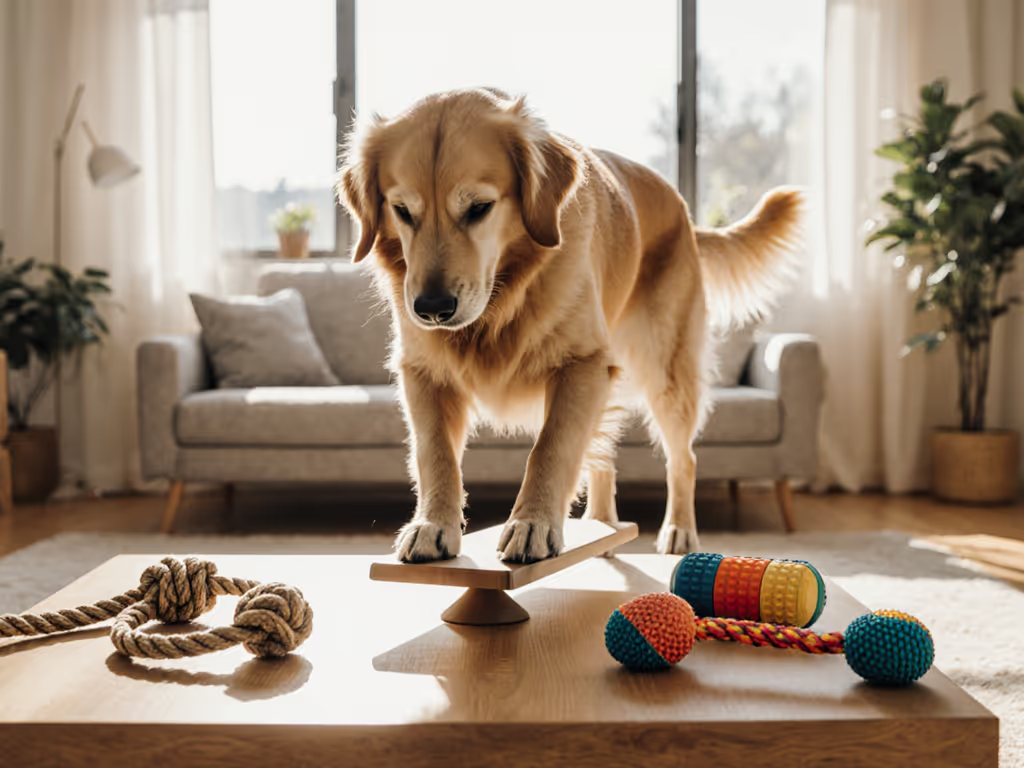
Canine proprioception science isn't abstract neurology (it's the reason your dog knows where their paws are when they leap, catch, or navigate a new surface). And it's the hidden lever behind body awareness toy selection[1][2][3]. When you understand how your dog's brain and body communicate, you stop guessing at toys and start matching them to what your dog actually needs to thrive.
Let me show you why this matters, and how to use it in a one-page framework.
What Is Proprioception, Really?
In simple terms, proprioception is your dog's internal GPS[1]. It's the constant feedback loop between sensory receptors in the muscles, joints, and tendons sending signals up the spinal cord to the brain (and the brain sending instructions back to adjust weight, balance, and foot placement)[3].
Every time your dog walks across a rocky trail, balances on a wobbly step, or catches a toy mid-air, proprioception is working in the background. It's not something you see; it's something you feel when it's working (smooth, confident movement) or notice when it's not (stumbling, hesitation, loss of composure)[1][3]. For a deeper dive into how different toys activate motor control circuits, explore our dog brain pathways guide.
Here's the critical part: proprioception isn't fixed at birth. It develops and strengthens with deliberate, varied movement, and it weakens with inactivity[3]. This is where toys enter the picture.
The Proprioception-Toy Connection
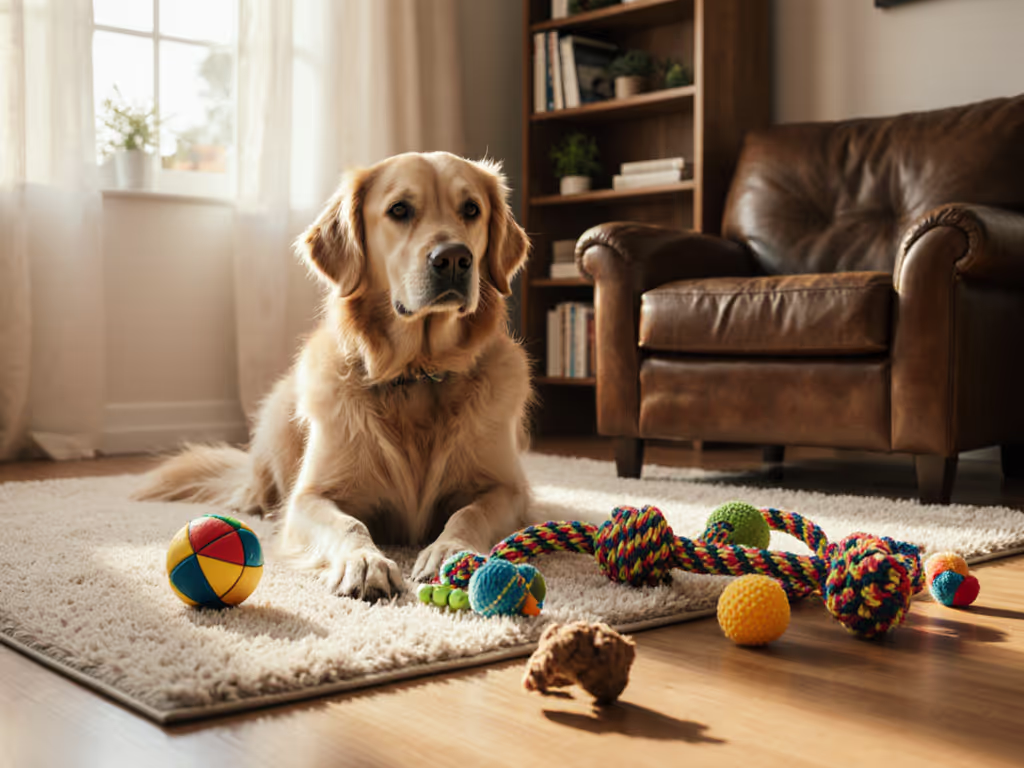
Most toy conversations focus on durability, size, or noise level. Important, yes. But they miss the neuroscience layer: does this toy engage your dog's body awareness, or does it just occupy their mouth?
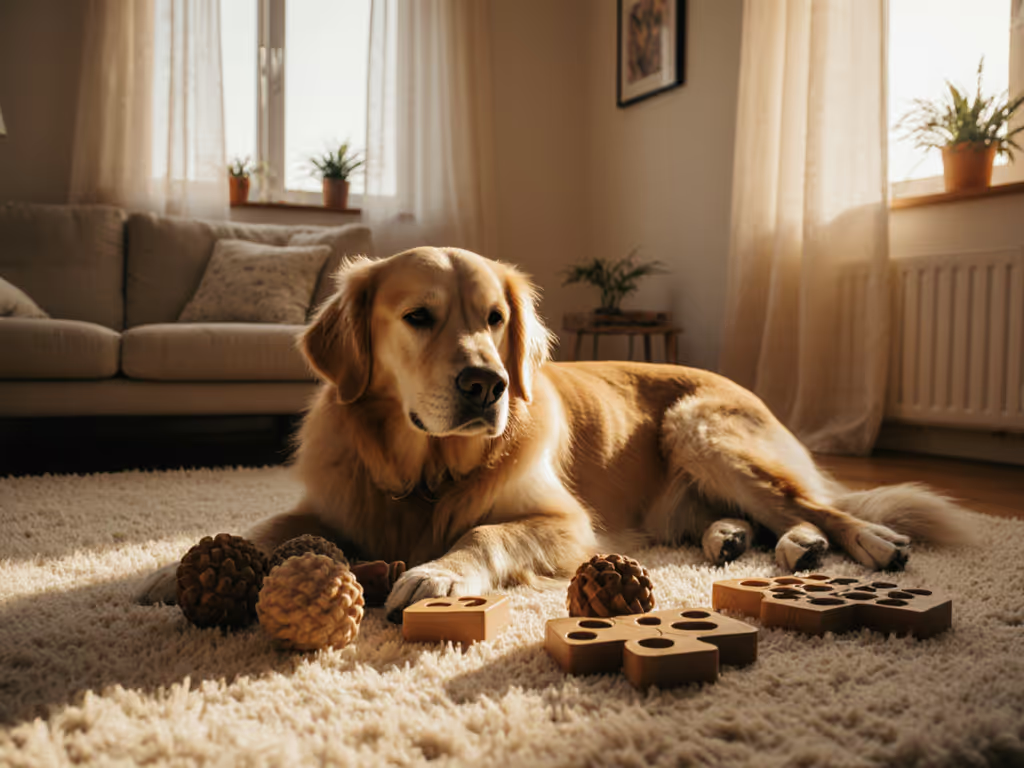
Consider the anxiety I witnessed years ago with a newly adopted pup. She was clever, restless, and ricocheting off walls (classic stress response). We didn't add more toys; we paused and mapped her playstyle. She needed slow, intentional engagement. When we introduced a puzzle toy that required her to adjust her weight, shift her paws deliberately, and problem-solve, something shifted. Her breathing slowed. Her focus deepened. Proprioceptive engagement had calmed her nervous system[3]. If anxiety is your primary concern, our fear-reduction toy comparison highlights low-arousal tools that pair well with proprioceptive work.
This is not accidental. Proprioceptive feedback in dogs acts as a regulator of emotional state and motor control[3]. Toys that demand conscious paw placement, weight shifting, or balance work strengthen the neural pathways between brain and body, reducing anxiety and building confidence[3].
The Three Pillars of Proprioception-Centered Toy Matching
To select toys that support your dog's body awareness, evaluate three dimensions:
1. Surface & Texture Variety (Proprioceptive Richness)
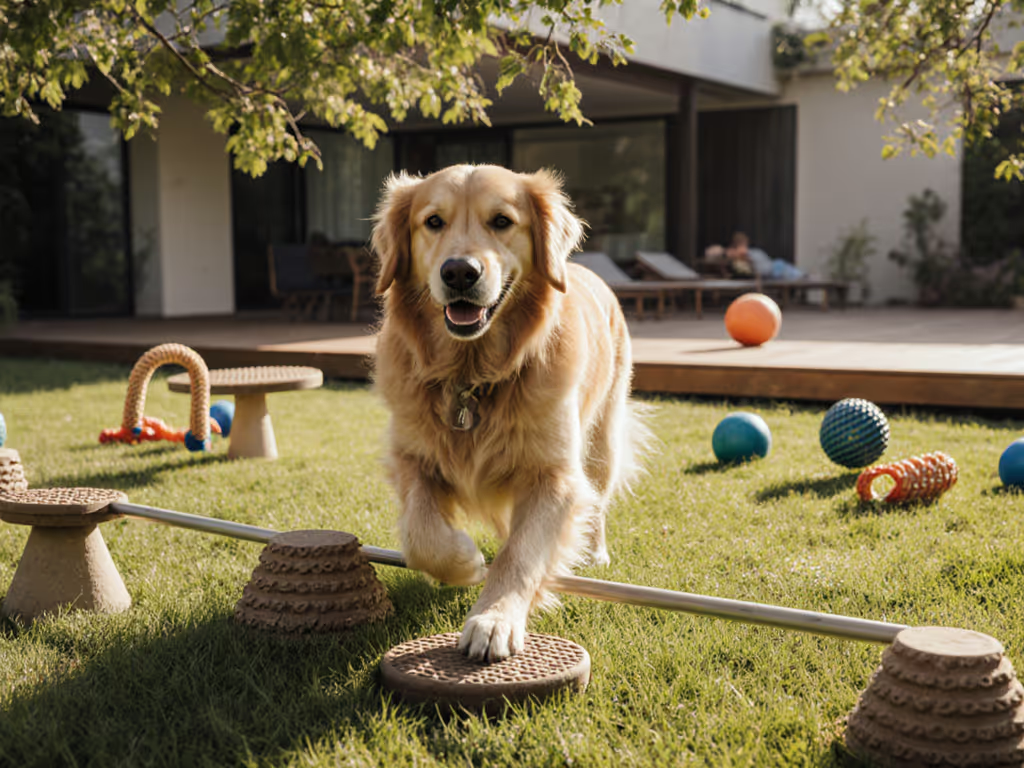
Your dog's paws are sensors. Flat, uniform surfaces tell the brain very little. Varied textures (nubs, ridges, uneven patches) demand constant micro-adjustments[2][4].
Must-have: Toys with multiple textures or those designed for uneven engagement (knobbed balls, grooved chew surfaces, textured puzzle mats). These force your dog to shift weight and adjust paw pressure continuously[3]. To fine-tune choices here, read the science of canine texture preferences for evidence-backed texture selection.
Why it works: Each texture change sends new proprioceptive signals, keeping the brain engaged and active[4]. This is especially important for sedentary dogs or those recovering from injury, where proprioceptive sensitivity naturally decreases[3].
2. Resistance & Challenge Gradient (Motor Coordination Enhancement)
Proprioceptive feedback in dogs strengthens when toys require effort without causing strain. A toy that's too easy requires no adjustment; a toy that's too hard causes frustration[3].
The fit check: Can your dog manipulate the toy with control? Can they shift their body weight to work it? Do they pause and recalibrate, or does the toy passively absorb their energy?
Must-have: Toys with variable resistance (stuffed puzzles that require nose-work and jaw control, or interactive toys that reward deliberate paw placement)[3]. Nice-to-have: toys with adjustable difficulty levels (freezable, fillable, modular). See our puzzle toys by difficulty guide to match challenge gradients to your dog's learning curve.
Why it works: Resistance that matches your dog's motor coordination enhancement stage (puppy, adult, senior) builds neuromuscular control without injury risk[3].
3. Size Band & Boundary Definition (Spatial Awareness)
Proprioception isn't just about limb position; it's about where your dog's body ends and space begins[1][3]. Toys that are too large or poorly defined confuse this boundary. Toys that fit your dog's mouth and body create clear spatial feedback[1].
The fit check: Your dog should be able to hold, rotate, and manipulate the toy without their jaw over-extending. The toy should feel like an extension of their body, not a bulky object they're fighting against.
Must-have: Toys sized to your dog's mouth and jaw band (small, medium, large, XL). If you're between sizes, choose the smaller option; it forces more precise control.
Why it works: A properly sized toy keeps proprioceptive signals accurate. Oversized toys introduce uncertainty, leading to tentative, anxious play[3].
Step-by-Step: The Playstyle Index for Toy Selection
Here's your one-page, one-match framework:
Step 1: Assess Your Dog's Proprioceptive Baseline
Before selecting toys, check your dog's current body awareness. Does your dog:
- Walk confidently on unfamiliar surfaces, or hesitate and feel their way?
- Catch toys mid-air with precision, or misjudge distance and fumble?
- Move with deliberate paw placement, or trip over their own feet?
- Respond quickly to balance shifts (playing on an uneven lawn), or seem slow to adjust?
If your dog shows hesitation, lack of coordination, or slow environmental response, they likely have underdeveloped proprioception. This is your signal to prioritize toys that build body awareness, not just entertainment[3].
Step 2: Match Toy Features to Current Need
Use this decision tree:
If proprioceptive development is weak: Prioritize toys with textured surfaces, moderate resistance, and clear boundaries. Avoid bouncy, unpredictable toys. Instead, choose puzzle-format toys that reward slow, intentional engagement. Frozen or fillable toys that demand weight-shifting are ideal.
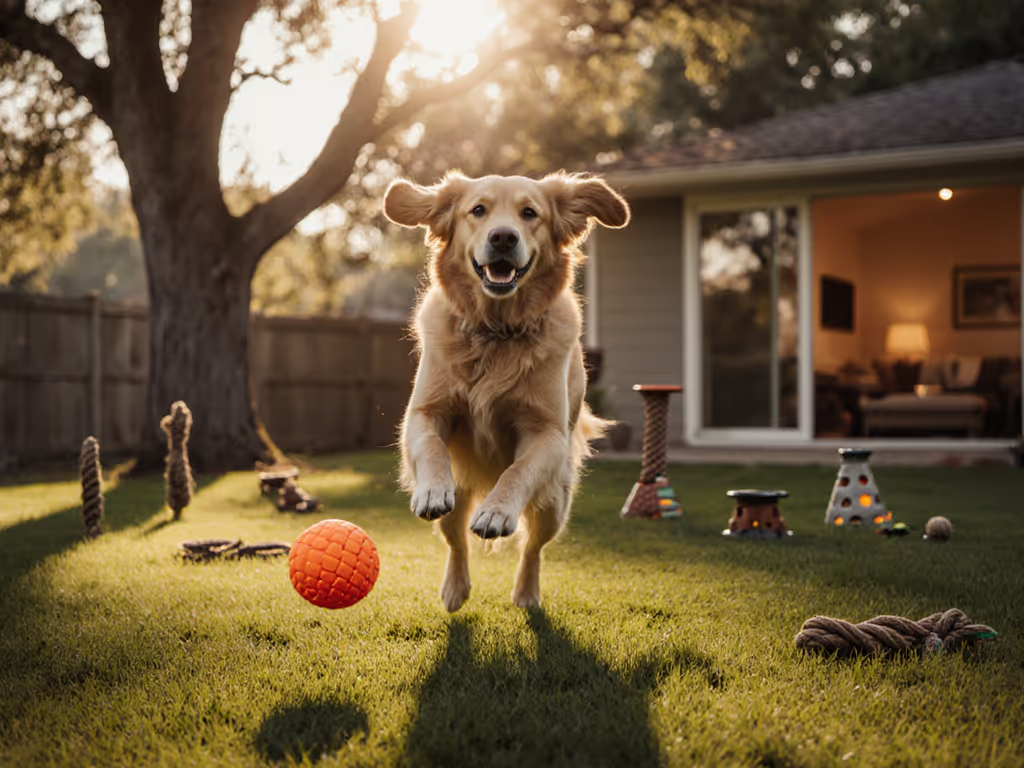
If proprioception is strong but energy is high: Your dog needs toys with variable challenge (ones that escalate as they learn). Consider puzzle toys with modular difficulty or balls that require coordinated jaw and paw work.
If your dog is senior or recovering: Prioritize low-impact toys with gentle resistance. Non-rolling puzzles, textured chew surfaces with forgiving give, and toys that reward light paw-work without joint stress.
Step 3: Build Your Decision Tree
- Size band match: Does the toy fit your dog's mouth without over-extension?
- Texture check: Does it offer varied, sensory-rich surfaces?
- Resistance level: Does it challenge without frustrating?
- Engagement type: Does it require deliberate paw placement, or is it passive?
- Safety signal: Are there no sharp edges, no small parts, and no choking risk? For a materials-first safety check, use our material failure modes guide before you buy.
If you answer yes to all five, you have a solid match. If not, adjust the feature that failed and retest until you can check each box.
Related Articles