
Decode Dog Toy Anxiety: Early Stress Signals
By Zara Haddad • 8th Apr
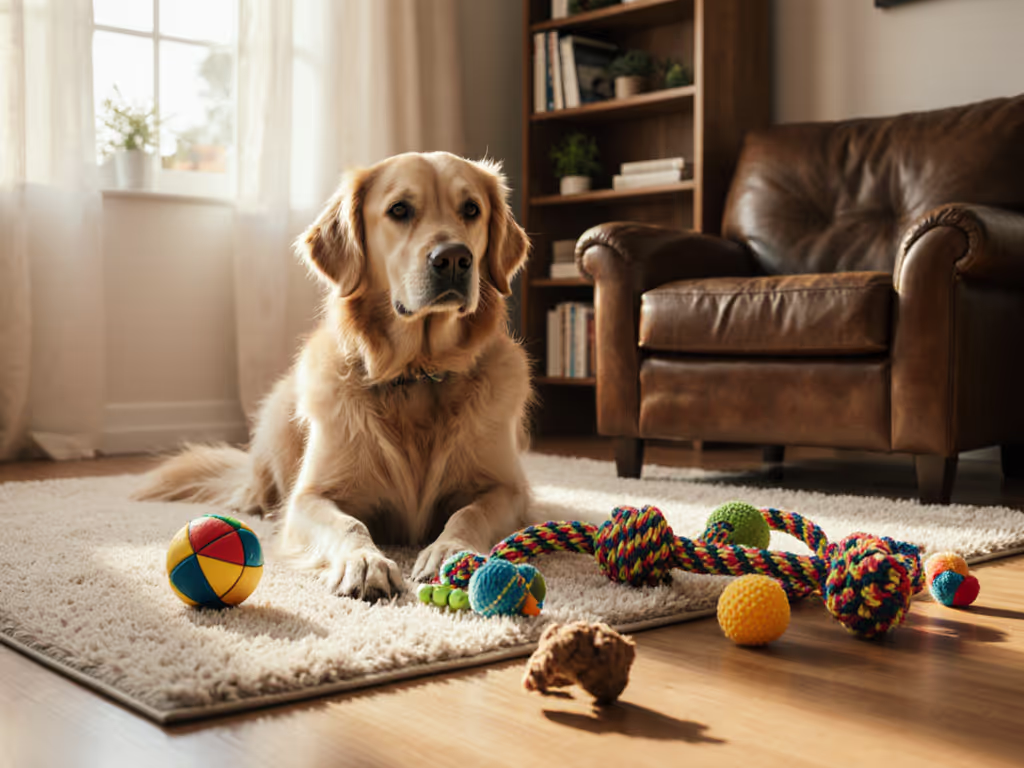
Recognizing dog toy anxiety signs and playtime stress indicators early can transform how your dog experiences enrichment and prevent destructive behaviors before they start. When a dog shows restlessness, avoidance, or escalating excitement around toys, it's often a signal that something about the toy (its size, material, or fit to your dog's playstyle) isn't working. This guide walks you through identifying those early warnings, diagnosing what's causing them, and matching your dog to toys that build confidence instead of anxiety.
Understanding Toy-Related Anxiety: Why It Matters
Most owners assume a dog that ignores a toy simply isn't interested. But subtle anxiety signals often hide beneath that surface. A dog may circle a toy repeatedly, pick it up and drop it, mouth it tentatively, or carry it away to chew in isolation, all signs of uncertainty or stress. Other dogs freeze mid-play, develop rigid body posture, or abandon the toy for resource guarding behaviors. If you see guarding tendencies, learn how to safely introduce new toys to reduce conflict and stress.
These responses stem from a fundamental mismatch: the toy feels unsafe, overwhelming, or physically wrong for the dog's mouth and jaw strength. Years of fostering taught me that even small misalignments (a toy too hard for sensitive teeth, too small to grip safely, or overstimulating with squeaks) cascade into anxiety that spreads beyond playtime. One anxious pup ricocheting around a room changed the moment I paused, mapped her playstyle, and introduced a quiet, scent-forward puzzle toy instead of a squeaker-loaded rope. Ten minutes of focused, calm engagement replaced frantic pacing. That shift cemented my mission: clear steps to decode anxiety before it hardens into avoidance or destructive behavior.
Step 1: Identify Early Stress Signals During Toy Introduction
Before diagnosing the problem, you need to see it clearly. Watch for these playtime body language cues during the first 2 to 5 minutes of interaction:
Behavioral red flags:
- Stiff mouth movement or jaw tension; the dog chews without relaxing
- Repeated dropping and reapproaching the toy (uncertainty loop)
- Carrying the toy away to isolate and chew alone (possible anxiety about sharing or overstimulation)
- Whining, soft growls, or avoidance when you present the toy
- Panting or lip licking (stress markers) paired with toy engagement
- Ears pinned back or eye contact avoided during play
- Sudden freeze mid-chew, then quick disengagement
- Jumping, spinning, or escalating arousal that doesn't plateau (overstimulation)
Physical discomfort signals:
- Head shaking or pawing at the mouth
- Difficulty gripping or holding the toy; repeated fumbling
- Drooling excessively or one-sided chewing
- Tilting the head at an odd angle to access the toy
These aren't character flaws; they're your dog's way of saying the toy-related fear behaviors are active. Catch them early, and you prevent months of anxiety spirals.
Step 2: Run a Diagnostic Check (Is It Size, Material, or Playstyle?)
Once you've spotted stress, the next step is isolating the cause. Think of this as a decision tree with three branches.
Branch A: Size Fit Check
A toy that doesn't fit safely triggers immediate anxiety. Follow this logic:
Measure and confirm: Watch how your dog currently handles toys, then measure across the widest part of their jaw. The toy should extend out both sides of their mouth, never fit entirely inside. If you're unsure, always choose a size up.
Match to weight band: Manufacturers provide sizing charts; here's the guide:
- Toy breeds under 5kg: extra-small toys
- Small breeds up to 10kg: small toys
- Medium dogs up to 25kg: medium toys
- Large dogs over 25kg: large or extra-large toys
If your dog is between categories, lean heavier. A slightly larger toy is safer than one that slips toward the throat.
Red flag: If your dog gags, chokes, or frantically tries to gulp the toy whole, size is the culprit. Remove it immediately.
Branch B: Material Hardness & Chew Resistance
Canine stress recognition also depends on whether the toy feels threatening to your dog's teeth and jaw. Materials that are too hard or too soft can trigger anxiety.
Use these standardized tests to match toy toughness to your dog's jaw power:
The Thumbnail/Fingernail Test: Press your thumbnail or fingernail firmly into the toy. If you can leave a slight indentation, it has appropriate give. If you can't mark it at all, it's too hard and risks cracking teeth.
The Bending Test: Gently flex the toy. It should bend or give slightly; if it's rigid and won't move, it's unsafe.
The Knee Impact Test: Strike your knee with the toy. If it causes discomfort, it's too hard for your dog's mouth.
These tests sound quirky, but they're the gold standard for safety. For a deeper look at risks by material and failure modes, see our dog toy material safety guide. They separate genuinely durable toys from ones marketed as "indestructible" but designed to shatter.
Material toughness spectrum:
- Soft: Ideal for puppies, seniors, or dogs with sensitive teeth. Plush or soft rubber options reduce fear.
- Moderate: Durable rubber or reinforced canvas for dogs with balanced chew pressure.
- Heavy-duty: Nylon, reinforced rubber, or extreme-strength fabrics for power chewers.
If your dog shows jaw tension or head-shaking during chew, the material is likely too hard. Swap to a softer grade and watch the anxiety lift.
Branch C: Playstyle and Enrichment Fit
Some dogs freeze on toys not because they're unsafe, but because they're unstimulating or mismatched to how the dog naturally plays.
Common playstyle mismatches:
- Power chewers given flimsy squeaker toys that collapse in seconds, triggering frustration.
- Puzzle-driven dogs handed flat bones with no cognitive challenge, leading to boredom avoidance.
- Social players given solo toys instead of interactive tug or fetch gear.
- Quiet seekers (often anxious or high-arousal dogs) exposed to constant squeaking, which escalates stress instead of calming it.
If you're unsure how to label your dog's natural tendencies, start with our dog play styles guide. Your Playstyle Index should include three elements:
- Chew drive: Does your dog gnaw lightly (soft), work toys steadily (moderate), or destroy them (heavy)?
- Play style: Does your dog prefer solo chewing, interactive tug, problem-solving, or motion play (fetch)?
- Sensory preference: Does your dog seek quiet, texture, scent, or sound?
When these three align with the toy, anxiety drops. A high-drive collie handed a puzzle toy that dispenses treats during play will show focused engagement, not stress.
Step 3: Apply the One-Page Diagnostic Framework
Here's your simplified decision tree to move from observation to action:
Question 1: Does the toy fit entirely in your dog's mouth?
- Yes → Size is the problem. Size up immediately.
- No → Move to Question 2.
Question 2: Can you leave a fingernail indentation in the toy or flex it gently?
- No (rigid and hard) → Material is too tough. Downgrade to softer material.
- Yes → Move to Question 3.
Question 3: Does your dog's playstyle match the toy type?
- Power chewer + squeaker toy? → Switch to heavy-duty, quiet option.
- Puzzle seeker + flat bone? → Add enrichment (puzzle, treat dispenser, or interactive element).
- Anxious dog + constant noise? → Choose quiet-only toys.
- Move to next tier once confidence returns.
One page, one match: confident choices without guesswork.
Step 4: Prevention (Match Before You Buy)
The strongest anxiety intervention is prevention. Before you bring a new toy home, audit it using this fit check:
Must-have checklist:
- Toy extends beyond both sides of your dog's mouth (measured)
- Passes the thumbnail indent test (some give, not rock-hard)
- Matches your dog's known chew strength (soft, moderate, or heavy-duty)
- Aligns with your dog's playstyle (solo vs. interactive, quiet vs. textured)
- No squeakers or high-stimulation elements if your dog shows sound sensitivity
- Non-toxic materials confirmed by the maker
Nice-to-have features (add later once core fit is solid):
- Dishwasher-safe or easy-clean textures (low mess)
- Freezable or fill-friendly designs for enrichment
- Rope or knot designs for interactive play
- Textured ridges for dental massage (adult dogs)
This framework takes the emotion out of purchasing. You're not relying on marketing hype or brand loyalty; you're matching toy attributes to a dog profile. That shift is where confidence lives.
Step 5: Test, Observe, and Refine
Once you've introduced a properly fit toy, give it a short window, 5 to 10 minutes, to work. Look for signs of canine stress recognition disappearing:
- Relaxed jaw and mouth movement
- Focused, sustained engagement (not frantic or avoidant)
- Soft eye contact or neutral gaze
- Normal body posture (not stiff, rigid, or frozen)
- Calm breathing and no excessive drooling or panting
If anxiety persists after the fit check passes, document what you observe and consider whether your playstyle diagnosis needs adjustment. Sometimes a dog labeled a "power chewer" is actually a puzzle seeker frustrated by lack of mental stimulation.
Keep a simple log: Toy model → Size/Material/Playstyle → Anxiety signals (yes/no) → Dog behavior post-introduction. Over 2 to 3 weeks, patterns emerge. That data becomes your personal toy matching guide.
Next Steps: Refine Your Framework
Now that you can decode anxiety, explore how toy rotation prevents boredom cycles, how to scale enrichment as your dog ages, and how to test durability claims using real-world time-to-failure metrics. For a step-by-step system, use our toy rotation guide. Connect with foster networks or shelter behaviorists who track which toys perform under high-stress conditions; that evidence beats marketing every time.
One anxious moment with the wrong toy is a signal, not a failure. It's your dog asking for a better match. Listen, diagnose, and adjust. Confident play follows.
Related Articles