Quiet Travel Dog Toys Gift Guide
By Alma Rivera • 11th Mar
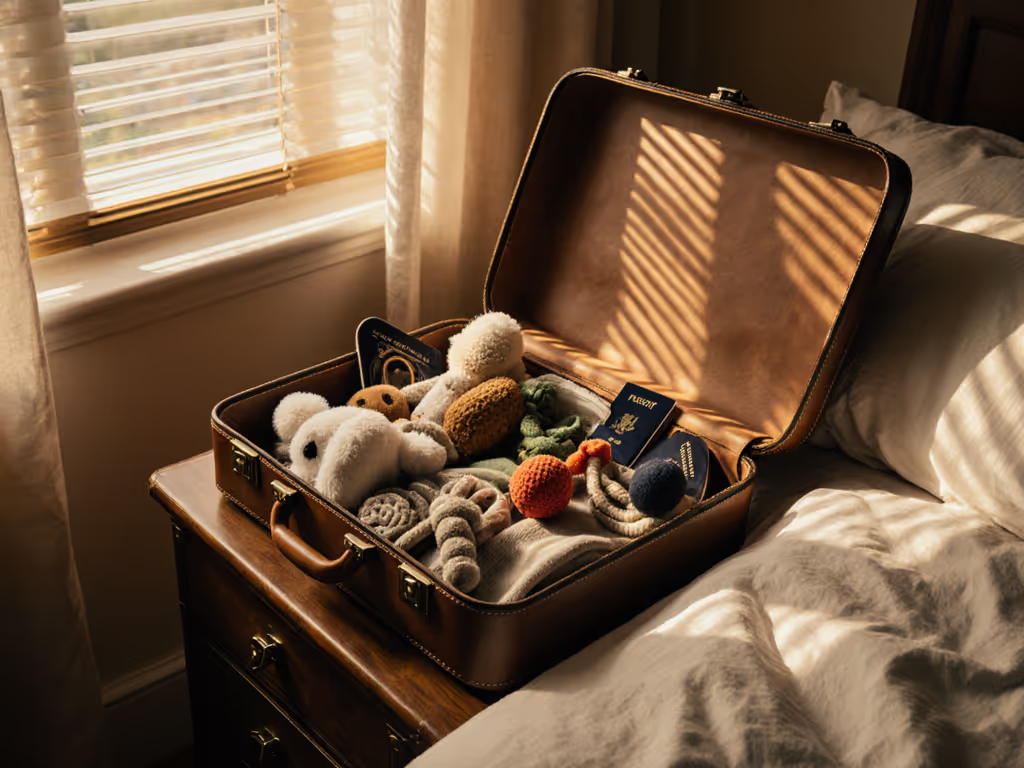
Choosing the right travel dog toys gift means matching quiet, portable solutions to your dog's playstyle while honoring the constraints of hotels, Airbnbs, cars, and shared spaces. This guide walks you through a data-backed process for selecting small dog enrichment toys that actually travel well (staying silent during quiet hours, packing flat, cleaning easily, and keeping engagement high without creating mess or supervision headaches).
I learned this the hard way: a night-shift neighbor, thin walls, and a bouncy herding foster who turned my red-eye drives into acoustic nightmares. I tested rubber weights, silent puzzle inserts, and plush options at 2 a.m., timing engagement and checking decibel readings on my phone. The best travel toys were not the flashiest; they were quiet, washable, and safe enough to leave unattended during bathroom breaks. Quiet brains beat loud rooms: design enrichment around life.
Step 1: Define Your Travel Context and Noise Profile
Before comparing toys, anchor your choice to where and when you'll use them.
Ask yourself:
- Are you driving cross-country, flying to a cabin, or staying in shared accommodations?
- Will play happen during quiet hours (early morning, late evening, nap windows)?
- Do you have a travel partner, roommate, or neighbor whose sleep/work you must protect?
- How much time will your dog spend engaged during the trip (short bursts or extended periods)?
- Will the toy live in a crate, car seat, or hotel room floor?
Noise profile framework:[2]
Plush toys and silent puzzle feeders carry a noise profile of 0-30 decibels, conversation-level quiet or below. Squeaky toys, even "soft" variants, register 70-85 decibels when engaged, matching vacuum-cleaner volume. Crinkle and honking sounds spike into the 80+ range.[1]
For apartment travel, shared walls, or early-morning departures, prioritize silent or ultra-low-noise options. If you're in a vacation home or rural setting with no neighbor proximity, squeaky toys are fair game, but even then, a silent option often sustains engagement longer because the dog isn't chasing novelty; they're solving a problem.
Setting this boundary first eliminates 60% of toy options and saves decision fatigue. For a ready-to-buy list tailored to flights and hotels, see our airline-approved travel toys that prioritize quiet, compact designs.
Step 2: Assess Your Dog's Playstyle and Chew Strength
Travel toys must be robust enough to survive a multi-day trip without splintering, leaking, or creating blockage risk. But they also need to match your dog's actual chewing intensity, not marketing hype.
Chew strength categories:
Gentle chewers (seniors, small breeds, anxious dogs who mouth more than crunch): These dogs benefit from soft, low-durability-demand toys like plush comfort items or lightly-stuffed puzzle feeders. They rarely destroy toys; the risk is boredom, not blockage. Setup time is minimal; supervision load is low. Wash cycles are frequent because these toys often absorb saliva.
Moderate chewers (most adult dogs, mixed breeds, dogs with average jaw strength): These are your reliable middle ground. They engage with toys for 10-30 minutes before losing interest, rarely ingest chunks, and respond to varied textures. Multi-layered rubber toys, canvas-blend plush, and puzzle inserts work well. Wash cycles are moderate; mess index is low if fillers are contained.
Power chewers (bully breeds, shepherds, retrievers, foster dogs with unknown histories): These dogs demand industrial-grade durability. Standard plush toys disintegrate in minutes; seams split, squeakers become choking hazards, and stuffing leaks onto hotel carpets. Rubber-based toys, reinforced canvas, and puzzle formats with metal or heavy-duty plastic components are non-negotiable. Setup time is higher (you'll need to freeze fillers, monitor closely during first use); supervision load is medium to high; wash cycles are frequent because the toy absorbs impact stress.
If your dog sits between categories (a larger gentle chewer or a smaller moderate chewer), err toward the higher durability tier. Our head-to-head Kong vs West Paw durability test can help you pick rubber workhorses that survive road trips. Travel adds stress to toys (car vibration, temperature swings, different flooring textures). A toy that lasts 30 minutes at home may shred in 15 minutes in a hotel crate.
Step 3: Compare Toys Across Four Core Metrics
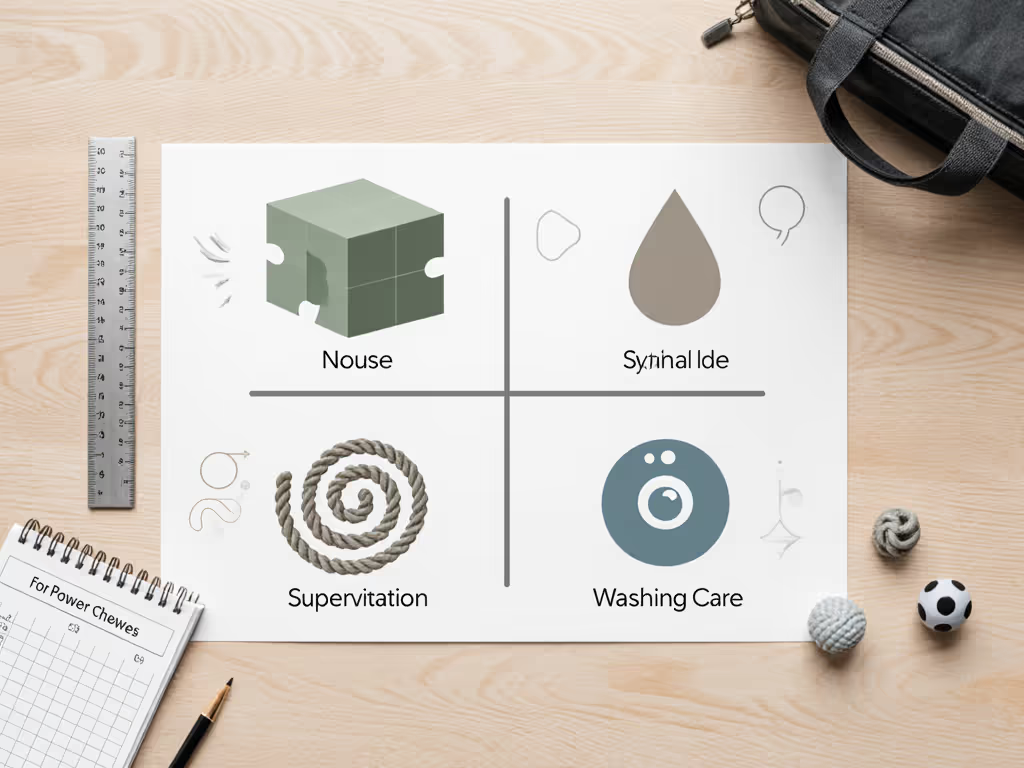
Instead of chasing brand names, score each candidate toy on the four dimensions that matter most in travel: noise profile, mess index, supervision load, and wash cycles.
Plush Comfort Toys: Silent Emotional Support
Noise profile: 0-15 decibels (silent unless dog shakes toy rapidly)
Mess index: Low to medium (minimal stuffing leakage; saliva absorption means damp odor after use)
Supervision load: Low (soft fabric, no choking hazard)
Wash cycles: 2-3 per week if dog mouth-carries it constantly
Ideal for: Anxious travelers, small breeds, senior dogs, crate training, pre-flight settling[2]
Plush toys are the MVP of road trip entertainment.[2] Dogs love to cuddle, carry, and gently chew on soft toys, and they're naturally quiet. A well-made plush toy can keep your pup occupied for hours while also providing comfort in an unfamiliar environment.[2] The Avocado Plush Dog Toy, for example, is the perfect size to tuck into a crate or car seat, soft enough for comfort, and durable enough to handle some stress-chewing, plus it's undeniably adorable poking out of your dog's travel bag.[2]
Trade-off: Plush toys don't provide heavy cognitive engagement or jaw workout. They excel at emotional support and settling, not problem-solving. For long trips, pair a plush with a puzzle or chew.
Setup time: Minimal. Grab the toy and go.
Tug Rope Toys: Rest-Stop Release Valves
Noise profile: 10-40 decibels (some fabric rustle, minimal squeak if embedded)
Mess index: Low (woven fibers don't shed; no fillers)
Supervision load: Medium (rope fibers can be ingested if dog chews apart the braids; requires monitoring)
Wash cycles: 1-2 per week (rinse after outdoor play to remove dirt)
Ideal for: Interactive rest-stop breaks, drive-time settling, dogs with high toy drive
Tug rope toys are perfect for a quick 5-minute play session at a rest area before getting back on the road.[2] The tug-of-war motion is a natural stress reliever for dogs, making it perfect for breaking up long stretches of driving.[2] The Carrot Tug Rope Interactive Dog Toy, for instance, is lightweight, easy to pack, and gives your dog an intense burst of interactive play.[2]
Trade-off: These require active human engagement (you hold one end). They're not for solo crating or hotel room solo time.
Setup time: None. Grab and go.
Puzzle Feeders and Slow-Feeder Toys: Brain-Heavy Engagement
Noise profile: 0-20 decibels (plastic clicking, no squeaks if designed well)
Mess index: Low if fillers are pre-portioned (kibble, freeze-dried pieces); medium to high if wet fillers (peanut butter, yogurt) are used without containment
Supervision load: Medium (first use requires monitoring; dogs sometimes flip or soil the toy; secure it in a crate or vehicle seat to prevent rolling)
Wash cycles: 2-3 per week (food residue requires thorough rinsing; top-loading designs allow quick disassembly)
Ideal for: Longer trips (2+ hours), dogs with high prey or foraging drive, anxious dogs needing 30+ minutes of focus
For drives exceeding two hours, you'll want something that can truly hold your dog's attention. Compare top treat-dispensing puzzles to find low-mess options that keep brains busy without noise. Interactive toys that require problem-solving are your best bet, because they engage your dog's brain and can provide 30+ minutes of focused entertainment.[2] The Chewpotle Bowl Slow Feeder Dog Toy pre-loaded with a few treats before hitting the road means your dog will spend ages working out how to get the goodies, and the slow-feeder design means they won't inhale everything in 30 seconds.[2] Just make sure it's secured so it doesn't slide around.[2]
Setup time: 10-15 minutes (portion kibble, freeze if using wet fillers, secure toy in crate)
Trade-off: These toys require planning and prep. They're not spontaneous grab-and-go options. Wet fillers can spoil in heat; dry kibble can scatter if the toy tips.
Rubber Chew Toys and Durable Compounds: Balanced Workhorses
Noise profile: 0-10 decibels (almost silent; rubber doesn't rattle or crinkle)
Mess index: Low (no fillers, no shedding; possible rubber dust if severely chewed, but minimal)
Supervision load: Low to medium (depends on toy sturdiness and dog's power-chew level)
Wash cycles: 1-2 per week (simple soap and water; many are dishwasher safe)
Ideal for: Moderate to power chewers, all-day crating, multi-day trips, dogs who destroy plush toys in minutes
Kong Signature Stick is a durable fetch and tug toy built for energetic dogs.[1] It's soft on teeth but tough enough for active play, perfect for retrieving, tugging, and interactive bonding sessions.[1] Its benefits last throughout repeated daily play, making it a great long-term exercise tool. Squeaking, crinkling, and honking sounds keep your dog engaged.[1] (Note: if you're noise-sensitive, choose a silent rubber variant.)
Kong Classic toys are versatile and durable, can be stuffed with treats to keep your dog engaged and distracted, feature durable rubber construction, promote mental stimulation, and are ideal for dogs who love interactive play.[3] Plush toys, in contrast, are the MVP of road trip entertainment,[2] while rubber toys provide silent, long-lasting chewing without mess.
Setup time: 5 minutes if you're freezing fillers; otherwise, minimal.
Trade-off: Rubber toys offer chewing satisfaction but less problem-solving depth than puzzle feeders. They work best as foundational chew toys paired with a puzzle for extended trips.
Step 4: Build Your Travel Toy Rotation by Trip Length
Not every toy works for every journey. Match your kit to the trip's duration and your dog's energy profile.
Short trips (under 2 hours):
- 1 plush comfort toy (settling, emotional support)
- 1 silent rubber chew toy (if your dog is a chewer; optional if your dog is low-drive)
Supervision load: low. Mess index: low. Setup time: zero.
Medium trips (2-6 hours):
- 1 plush comfort toy
- 1 puzzle feeder or slow-feeder toy (pre-loaded with kibble or freeze-dried pieces)
- 1 silent rubber chew toy or rope toy
Supervision load: medium. Mess index: low to medium. Setup time: 10 minutes (prep puzzle toy).
Extended trips (6+ hours or multi-day):
- 1 plush comfort toy (settling between active play)
- 2 puzzle feeders or slow-feeder toys (rotated to prevent boredom; one can be refilled while dog works the other)
- 1 silent rubber chew toy (backup, all-day crating)
- 1 tug rope toy (rest-stop interactive breaks)
- Optional: a second plush variant (e.g., one with a heartbeat simulator for anxiety) if your dog struggles with settling
Rotation strategy: Don't present all toys at once. Introduce one every 45-60 minutes of driving. For a home-and-travel system, use our toy rotation guide to keep engagement high with fewer toys. This staggered approach prevents novelty collapse and extends the total engagement window. Once a toy has been "used" (puzzle depleted, chew toy worn), retire it for the return leg or later in the trip.
Supervision load: medium to high. Mess index: low to medium. Setup time: 15-20 minutes (prep both puzzle toys; check for leaks or damage after each use).
Step 5: Prioritize Cleanability and Maintenance
Travel toys will get wet, dusty, saliva-soaked, and possibly soiled. Choose toys you can clean in a hotel sink or back-of-car wash bucket without losing your mind. Get step-by-step methods in our cleaning guide by material and mess level.
Dishwasher-safe toys (rubber, heavy-duty plastic): Top-rack safe, quick turnaround, no hand-scrubbing. Ideal for extended trips.
Wipe-and-rinse toys (canvas, treated fabric): Rinse under running water, wring, air-dry. Plan for 2-3 hours of drying time; pack extra plush toys so one can dry while the dog uses another.
Hand-wash-only toys (delicate plush, leather, hand-stitched): High maintenance. Avoid for travel unless it's your dog's irreplaceable emotional-support item.
Toys with crevices or stitching flaws: Food particles trap inside, creating odor and mold. Avoid multi-layer designs with exposed seams unless you're willing to deep-clean nightly.
Wash cycles: Track how many times per trip you'll need to clean each toy. If a toy requires washing after every use, factor in drying time and pack a backup.
Step 6: Safety Checklist Before Packing
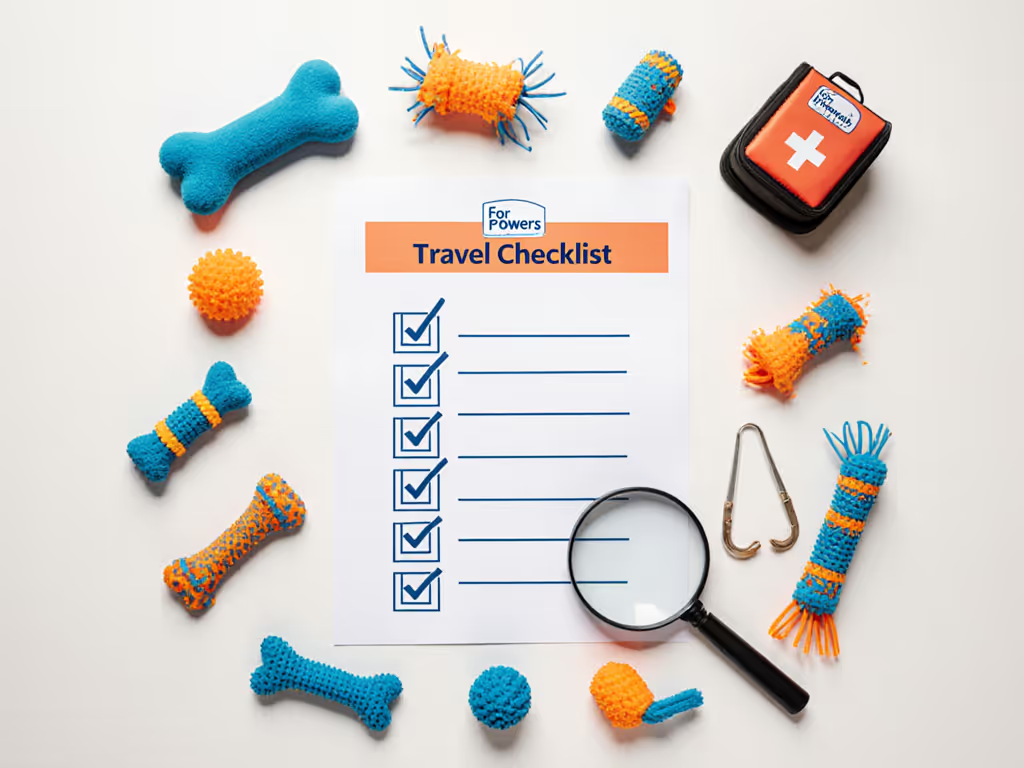
Before any trip, inspect each toy:
- Seams: No splitting, loose stitching, or fabric peeling away from stuffing.
- Squeakers: Firmly embedded, not loose or separable (choking risk).
- Fillers: No toxic stuffing (check label for BPA, phthalates); no polyester fiberfill that sheds easily.
- Size: Toy should not fit entirely in your dog's mouth; it should be larger than their throat diameter.
- Damage from prior use: If a toy shows wear from home play, don't rely on it for a trip. Stress from travel (temperature changes, car vibration) accelerates breakdown.
- Material origin: Prefer toys made in regulated countries with clear material labeling (rubber type, fabric blend, adhesive safety).
Step 7: Test Your Kit at Home Before Travel
Run a 2-4 hour trial: pack your toys, get in the car or crate setup, and observe.
- Does your dog engage with the toys in that environment, or do they just nap and ignore them?
- Does the puzzle toy spill kibble everywhere, or is it contained?
- Do the toys make unexpected noises (squeaks you didn't hear indoors, crinkle amplified by car acoustics)?
- Can you clean each toy in a single bathroom sink, or do you need special tools?
- How long does each toy sustain engagement? (Note: engagement time is often 30-40% shorter in travel contexts because the car environment is less familiar.)
- Does your dog try to destroy toys more aggressively due to stress, or do they stay calm?
Use this trial to adjust your kit. If a toy under-performs or creates mess you didn't anticipate, swap it out before the real trip.
Your Actionable Next Step
This week, complete this short audit:
- Identify your travel context: How long is your next trip? Shared walls or private space? Quiet hours you must respect?
- List your dog's chew strength and playstyle: Gentle, moderate, or power chewer? Do they prefer problem-solving, physical chewing, or emotional support?
- Score your current toys using the four metrics (noise profile, mess index, supervision load, wash cycles). Which ones pass? Which ones don't fit your travel needs?
- Select one toy to add that fills your biggest gap, whether that's a silent puzzle feeder, a washable plush, or a durable rubber chew.
- Run a 2-hour home trial before packing for your trip.
Great enrichment should fit your household's rhythm, not fight it. The same is true for travel. A toy that's quiet, easy to clean, and matched to your dog's playstyle isn't just safer, it's the difference between a peaceful 6-hour drive and a stress-soaked ordeal.
Pack smart, and your dog's brain will thank you.
Related Articles