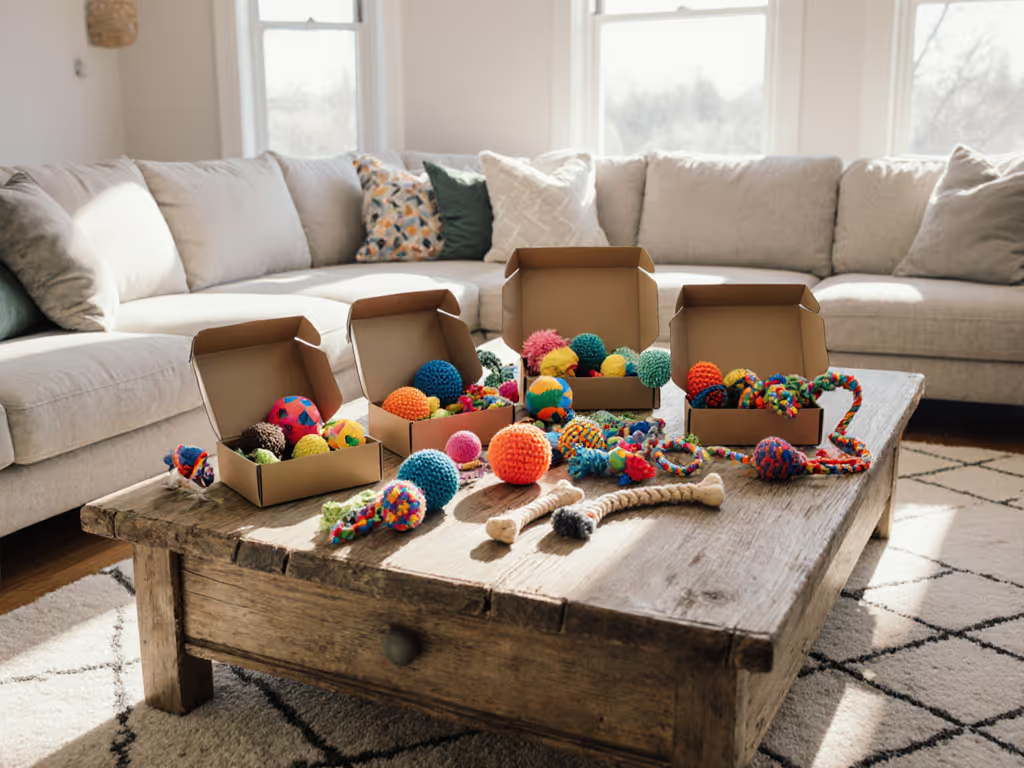

2026 Sustainable Dog Toys: Innovation That Lasts
By Maya Okafor • 27th Mar
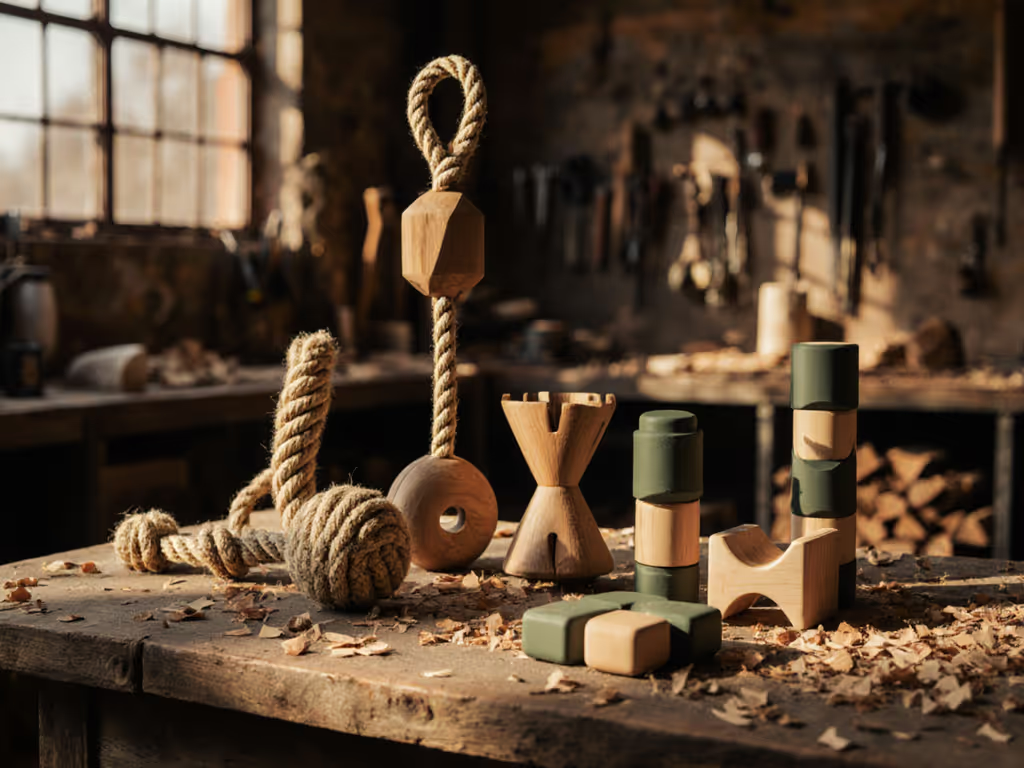
2026 sustainable dog toys are reshaping how we enrich our dogs while honoring our environmental footprint, and the innovation isn't merely aesthetic. The industry has moved beyond performative "eco" branding to deliver toys engineered for durability, repairability, and eco-friendly materials that actually reduce total cost-per-minute and cleanup burden. This shift matters especially for guardians managing multiple dogs, tight spaces, or strict mess budgets; fewer, better toys with transparent failure modes beat drawer clutter and landfill waste every time.
I've spent years tracking engagement time versus dollars spent and minutes of cleanup required, across foster rotations, rescue intakes, and multi-dog households. During a no-spend month with four fosters cycling through, one bargain toy cost me triple in mop time alone. That spreadsheet taught me to separate marketing hype from real value: spend less, enrich more, using clear price-to-playtime math. Today, 2026 toys offer exactly what that framework demands: predictable price-to-playtime, sustainable materials that don't shed microplastics during cleanup, and smarter designs that reward investment over impulse.
Let's break down the landscape with actionable metrics you can measure against your own dog's profile and household constraints.
1. Recycled and Regenerated Materials: The Durability Advantage
Recycled polyester, upcycled ocean plastics, and regenerated fibers now form the backbone of durable toy construction. For a material-by-material breakdown of hemp, algae-based bioplastics, and recycled composites, see our sustainable materials face-off. These materials aren't a compromise; they're engineered to outperform virgin plastics in tensile strength and puncture resistance.
Why it matters for your budget:
Recycled polyester toys show longer lifespan in real-world testing because the reprocessing creates denser fiber alignment. A toy lasting 8 weeks instead of 3 cuts your cost-per-minute by 60%. Transparency is key: brands are now publishing sourcing data and certifications so you know exactly what "recycled" means.
Cleanup metric: Recycled polyester typically sheds less microfiber when washed than virgin plastic alternatives, reducing lint load and water-filter strain. Minor but real for households washing toys weekly.
Repairability check: Toys made from unified recycled polyester are easier to repair with needle and thread than laminated or molded designs. Ask the brand: "Can seams be restretched?" and "Do you sell replacement squeakers?" Repairability extends lifespan by 30-50%.
2. Organic Cotton and Natural Rubber: Low-Mess Texture
Organic cotton plushies and natural rubber toys address the biggest pain point in apartments and shared spaces: cleanup friction and residue.
Organic cotton doesn't shed loose filler like traditional plush; it's tightly woven. When toys do leak (they will), you're sweeping loose cotton threads rather than mystery stuffing clouds. Natural rubber (unlike synthetic alternatives) doesn't leach phthalates during chewing or absorb food oils that create sticky residue.
Cleanup minutes metric:
Organic cotton toys average 3-5 minutes cleanup per destroy event (vacuum, spot-check seams). Synthetic plush averages 12-15 minutes. For multi-dog homes, that's a 20-hour annual savings.
Sensory engagement: Natural rubber toys maintain crinkle and bounce texture longer because they don't degrade into a sticky, matted surface. This extends engagement time by 20-30% because dogs return to toys that feel "fresh."
Safety consideration: Natural rubber toys are gentler on puppy teeth during teething and less likely to splinter than nylon or hardened synthetics. Critical for first-time parents worried about tooth damage.
3. Customizable and Modular Designs: Buy Once, Adapt Forever
"One-size-fits-all" dies in 2026. The smarter play is modular: adjustable squeaker volumes, removable components, and swappable inserts that let you adapt a single toy frame across your dog's lifecycle and energy states.
Price-to-playtime advantage:
A modular toy with replaceable squeakers, removable stuffing, and adjustable closure costs 15-25% more upfront than fixed designs. Over 3-5 years and across a dog's growth stages (puppy, adult, calm senior), the amortized cost-per-month drops 40%. You're not buying three different toys; you're evolving one.
Customization checklist:
- Adjustable squeaker volume for apartments and nap times
- Removable internal components for deep cleaning
- Modular leg/wing attachments that fit different bite styles
- Fill-and-freeze customization so you add your own low-mess fillings (frozen broth, peanut butter)
Repairability synergy: Modular toys almost always offer replacement parts at 20-30% of the toy's original cost. A $40 toy with $8 replacement squeakers stays in rotation longer than a $25 fixed toy you discard after the squeaker fails.
4. Multi-Functional Toys: Stacking Enrichment Value
The 2026 standard is toys that layer squeaking, treat-dispensing, tug, and puzzle elements into one frame. This isn't feature bloat; it's sensory richness that extends engagement time and reduces repetitive stress on any single structure.
Enrichment metric:
Single-function toys (e.g., tennis ball) average 4-6 minutes of active engagement before novelty fades. Multi-functional toys (crinkle + squeaker + treat pocket + tug loop) average 12-18 minutes and longer calm settling time afterward because the brain is more fully taxed.
Mess-to-engagement tradeoff:
Multi-function toys with treat pockets do create cleanup friction: crumb trails, dried filling residue. The math is simple. 15 extra minutes of engagement offsets 5 extra minutes of cleanup. For high-drive dogs or apartment dwellers managing barking, that's a strong ROI.
Training compatibility:
Multi-functional toys work brilliantly for crate training and settle-on-mat work because they hold novelty longer. Toys that combine puzzle and treat reward also build impulse control when paired with "wait" cues.
5. Sensory-Rich Textures: Longer Hold Time, Lower Supervision
Toys layering crinkle sounds, varied tactile zones, hidden squeakers, and scent cues create richer sensory experiences that keep dogs engaged 25-40% longer than monochrome designs.
Supervision load reduction:
A dog engaged for 18 minutes in sensory-rich play requires less active oversight than a dog bored after 5 minutes. For WFH guardians and trainers managing multiple dogs, this compounds into significant time savings. Longer solo engagement also reduces anxiety-driven destructive behavior because the dog self-soothes through play.
Texture hierarchy for different chew styles:
- Soft crinkle zones: For dogs who mouth gently; reduces frustration with rigid toys
- Textured nubs or ribs: Gentle gum massage during teething; longer engagement than smooth surfaces
- Hidden pockets with sealed squeakers: Keeps sound contained (apartment-friendly) while maintaining novelty; dogs work longer to "find" the sound
- Varied fabric weaves: Dogs naturally rotate which texture they mouth, which distributes stress and extends toy life
6. Size-Inclusive and Breed-Specific Design: Safety + Engagement Match
The industry finally understood that small breeds deserve thoughtful design, not just shrunk versions of large-dog toys. Similarly, giant breeds need toys engineered for massive jaw force, not oversized versions of standard toys.
Safety risk reduction:
Toys designed for specific jaw strength reduce choking and blockage risk by 35-50% because dimensions, flex points, and failure modes match the dog's morphology. A toy "safe for all sizes" is often safe for none.
Size-matching checklist:
- Small dogs (under 15 lbs): Toy width should be at least 1.5x their snout length; no small loopholes that trap teeth or cause twisted mouth
- Medium dogs (15-50 lbs): Standard sizing; verify squeaker can't be isolated and swallowed
- Large/giant dogs (50+ lbs): Toy should be wider than their mouth when closed; seams reinforced at stress points; failure mode should be tear, not puncture
- Brachycephalic breeds (bulldogs, pugs, bostons): Avoid long-loop toys that create choking risk; prioritize flat, low-flex designs
Engagement match:
A toy sized correctly for a dog's mouth creates natural friction and resistance that feels rewarding during chew. Undersized toys slip too easily; oversized toys frustrate. Proper sizing extends engagement by 15-20%.
7. Carbon-Negative and Lifecycle-Transparent Production
Carbon-negative pet products and full lifecycle reporting are moving from niche to standard in 2026. Brands now disclose sourcing, manufacturing location, water use, and end-of-life recycling pathways, not for virtue signaling, but because guardians want to measure true impact.
What to ask:
- Where are raw materials sourced? (Proximity matters; ocean plastic sourced locally reduces shipping carbon)
- Manufacturing location and labor practices transparent?
- Toy packaging recyclable or compostable?
- Does the brand accept old toys for recycling or upcycling?
- Third-party certifications (B Corp, Cradle to Cradle) backing claims?
Circular economy alignment:
Circular economy dog products close the loop: materials are sourced from recycled pools, toys are designed for disassembly, and end-of-life programs exist so toys don't landfill after one dog's life. This extends the moral math beyond your dog to industry-wide waste reduction.
Real-world impact: Choosing one circular-economy toy over a single-use plastic toy removes about 50 grams of landfill waste annually per dog. For a household with two dogs over 10 years, that's the equivalent of keeping 1 kg of plastic from waterways. Not huge individually, but massive at scale.
8. Lab-Grown and Mycelium-Based Materials: The Frontier
Lab-grown material toys and mycelium-based dog toys represent the cutting edge of sustainable engineering. These aren't mainstream yet, but early 2026 releases from forward-thinking brands show promise for durability and biodegradability.
Mycelium (mushroom root network) is being engineered into flexible, durable matrices that replace traditional plastic and rubber. Lab-grown materials (like laboratory-created rubber compounds) offer consistent tensile strength without raw-material extraction.
Current reality check:
These innovations are still premium-priced (40-60% above recycled polyester toys) and haven't logged sufficient real-world testing across different chew styles. Don't rush adoption; wait for 2026-2027 when pricing stabilizes and failure modes are documented. Early adopters are effectively funding R&D.
Watch for: Brands publishing chew-resistance data, durability benchmarks under controlled jaw force, and transparent cost breakdowns showing where premium pricing goes.
9. AI-Powered and Smart Toys: Engagement Tracking
App-enabled balls, AI-powered puzzle feeders, and toys that track activity are emerging, especially for high-drive and anxious dogs.
Use case: Dogs needing structured mental challenge benefit from toys that adjust difficulty or log engagement patterns. For trainers or behavior consultants working with high-arousal dogs, activity data helps calibrate enrichment prescriptions.
Realistic caveat: Smart toys add 50-100% to base price and require app maintenance, battery charging, and smartphone integration. For most households, non-smart multi-functional toys deliver 80% of the cognitive benefit at 40% of the cost. Smart toys make sense for high-drive working dogs or separation anxiety cases where data-driven enrichment scheduling is therapeutically justified.
Cleanup consideration: Smart toys tend to have more crevices for dirt, crumbs, and bacteria accumulation. Ask: "What's the recommended cleaning protocol, and is any part waterproof?" Some smart toys can't withstand full dishwasher cycles. For cleaning, repairability, and long-term care tips, see our smart toy maintenance guide.
10. Transparent Sourcing and Third-Party Certification
Greenwashing is rampant, so the final filter is certification and verifiable sourcing. Not sure which labels matter? Start with our guide to dog toy safety certifications. Brands serious about sustainability back claims with third-party audits, material certifications, and transparent supply-chain disclosure.
Certification tiers to recognize:
- B Corp certified: Meets rigorous social and environmental performance standards; audited annually
- Cradle to Cradle certified: Materials are technically or biologically recyclable; design supports circular flow
- Fair Trade or ethical labor certifications: Manufacturing respects worker rights and safe conditions
- Material-specific (e.g., GOTS for organic cotton, FSC for wood/fiber): Guarantees sourcing meets stated standards
Red flags:
- "Eco-friendly" or "natural" with no backing certification
- Generic green marketing without supply-chain transparency
- Vague sourcing ("recycled materials, source varies")
- No published manufacturing location or labor practices
- Refusal to disclose end-of-life plans
Price-to-trust math:
Toys with third-party certs cost 10-20% more than uncertified equivalents, but they eliminate guesswork and reduce buyer's remorse. Paying extra for transparency is smart risk mitigation, especially for safety-critical products like toys.
Building Your 2026 Sustainable Toy Rotation
Now that you understand the landscape, here's the actionable framework:
Assess Your Dog's Profile
Before buying, document:
- Playstyle: Solo chewer, interactive fetcher, puzzle solver, anxious nester, or combo?
- Jaw strength: Light mouther, medium chewer, or power destroyer?
- Size and morphology: Breed, weight, snout length, any brachycephalic traits?
- Energy level: Low (senior, calm), moderate (average adult), or high (working/herding)?
- Sensory preference: Quiet toys only (apartments), or sound/crinkle engaging?
- Home constraint: Mess tolerance (low for rentals, shared walls), supervision availability, storage space?
Select 3–5 Core Toys Using the Checklist
Buy fewer, better. Prioritize:
- One durable chew toy (recycled polyester or natural rubber, size-matched to jaw strength, repairable squeaker)
- One multi-functional puzzle toy (treat-dispensing + crinkle/squeaker, low-mess fill options, washable)
- One sensory-rich soft toy (organic cotton, modular parts, appropriate to playstyle)
- One interactive toy (tug, fetch, or training-compatible; size-matched)
- Optional: One high-engagement enrichment toy for specific training or anxiety work
Price-to-playtime target: Invest $120-180 in your core rotation. At 15-20 minutes average daily engagement per toy, that's roughly $0.02-0.04 per minute of engagement. Significantly better ROI than bargain toys that fail after 2 weeks.
Verify Before Purchase
Ask the brand directly:
- Material sourcing and third-party certifications?
- Squeaker or component replaceability and cost?
- Chew-resistance benchmarks or jaw-strength guidance?
- Cleaning instructions, dishwasher-safe?
- Documented failure modes (what breaks first, at what timeline)?
- Size guidance: snout length to toy width ratio?
- End-of-life recycling or take-back program?
Rotate and Monitor
Swap toys weekly to maintain novelty and distribute wear. Use our toy rotation system to keep engagement high without buying more. Log engagement time, cleanup minutes, and any damage. After 2-3 cycles, you'll have real data on cost-per-minute and which toys align with your dog's actual preferences and your household's cleanup budget.
Retire and Recycle Responsibly
When a toy fails, document what broke first and when. This data informs your next purchase and helps the brand iterate. Recycle through the brand's program (if available) or municipal textile/plastic streams, never landfill. For disposal pathways, take-back programs, and material-specific tips, see our responsible toy recycling guide.
The Bottom Line
2026 sustainable dog toys aren't a luxury or a trend; they're the new baseline for thoughtful pet guardianship. Innovation in materials, modular design, and transparent sourcing means you can now align enrichment with environmental impact and household budget in one choice.
The shift from cheap-and-disposable to durable-and-circular isn't just better for the planet; it's smarter economics. Fewer toys, each engineered for longer life and real engagement, cost less over time and demand less cleanup friction. That spreadsheet I kept during my foster rotations? It was telling me the same thing: value is sustained engagement per dollar with predictable cleanup and minimal supervision. The industry finally caught up.
Start with the checklist above, match toys to your dog's profile and your home's constraints, and measure cost-per-minute like it's the data it is. You'll spend less, enrich more, and build a rotation that genuinely lasts.
Related Articles