
Deaf-Blind Dog Toys: Multi-Sensory Features Ranked
By Sanjay Bhatt • 4th Apr

What Makes Multi-Sensory Toys Essential for Deaf-Blind Dogs?
Deaf-blind dogs rely on three primary sensory channels: touch, smell, and taste. Unlike single-impairment dogs, they cannot compensate with vision or hearing alone. Engagement requires toys that deliver immediate, repeatable feedback across multiple modalities simultaneously.[1][3]
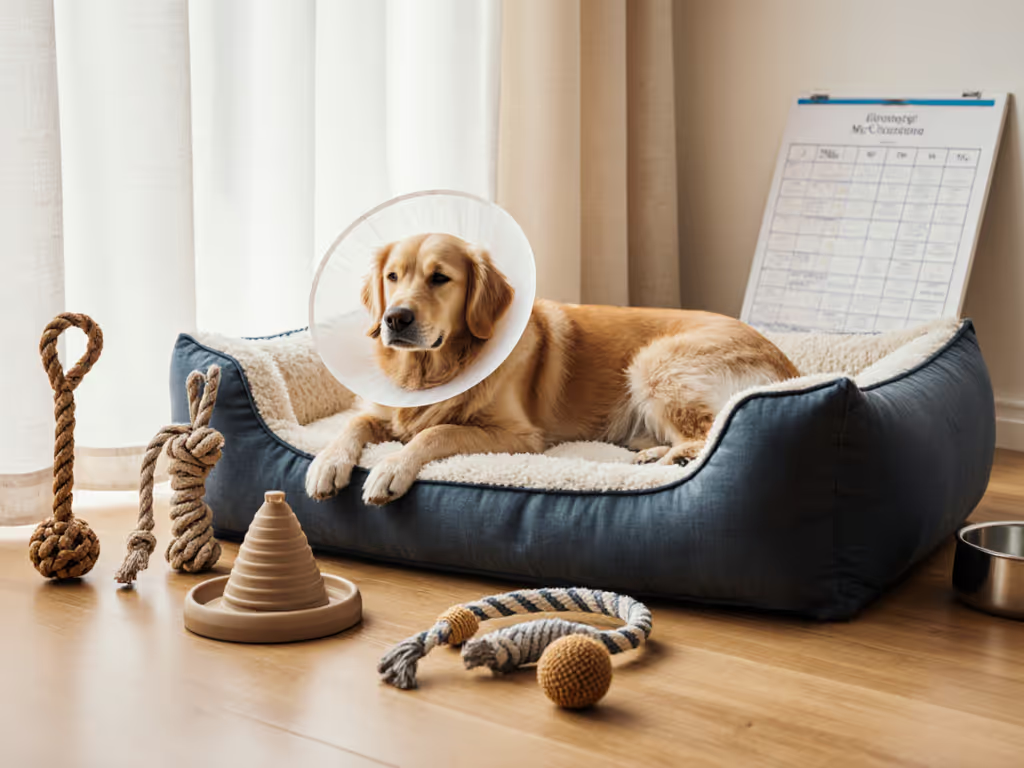
In peak intake season, enrichment rounds start before sunrise. I chart bite patterns, inspect seams, and log failure modes between kennel cleans. The toys that survive a week with deaf-blind dogs intact (retaining texture, structural integrity, and engagement value) are the ones worth recommending to your living room. That real-world shelter stress-test (then recommend for your living room) approach eliminates guesswork.[1] For broader accessibility guidance across mobility and sensory challenges, see our disabled dog toys guide.
Multi-sensory enrichment also reduces anxiety and promotes calmer settling post-play, a critical outcome for dogs managing dual sensory loss.[3]
FAQ: Core Toy Categories and Their Risk Profiles
What Are Tactile-Vibrational Toys, and Why Do Deaf-Blind Dogs Prefer Them?
Tactile-vibrational toys feature multiple textures (ridges, knobs, soft zones, crinkle layers) that stimulate the paw and mouth simultaneously while producing subtle vibrations (crinkles, crunches) felt through the jaw.[2][3] The unpredictable shape provides mental stimulation, while the different textures support dental health during chewing.
Risk profile for this material class:
- Durability under power chewing: Medium-to-High (depends on material hardness and seam integrity)
- Supervision demand: Low (textures rarely splinter into small pieces if engineered correctly)
- Enrichment dose: 15-30 minutes per session before novelty fades
- Failure mode: Seams splitting under sustained chewing, revealing internal materials
Examples: Kong Wubba Dog Toy combines playful tassels, squeaker vibration (felt through jaw), and proven durability across hours of play.[4] The Crunchcore Bone mimics water-bottle texture, a sensation many high-arousal dogs find rewarding.[2]
How Do Puzzle Toys and Interactive Mats Differ in Engagement Value for Deaf-Blind Dogs?
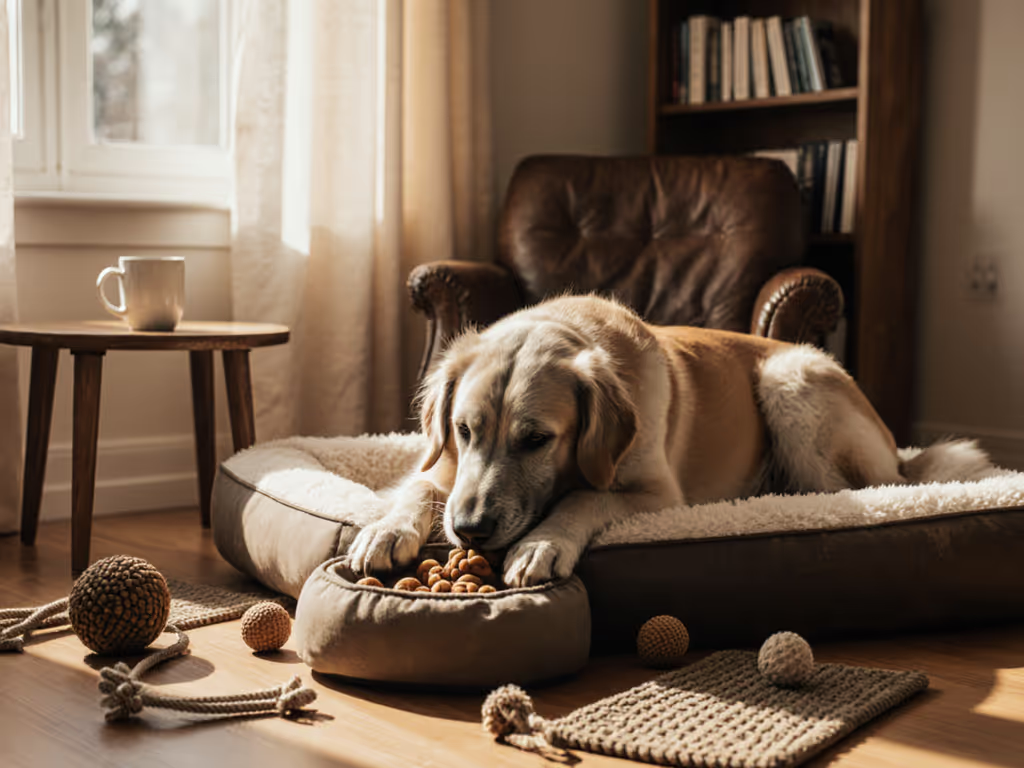
Puzzle toys require nose-work and problem-solving to access rewards. Interactive mats (snuffle mats, treat-dispensing boards) hide treats within fabric folds or compartments, encouraging extended sniffing and mental engagement.[1][3]
| Feature | Puzzle Toys | Interactive Mats |
|---|---|---|
| Engagement duration | 10-25 min (once solved, interest drops) | 20-45 min (ongoing sniff-reward cycle) |
| Sensory input | Tactile + olfactory (strong) | Olfactory + texture (moderate) |
| Durability risk | Squeakers fail; plastic mechanisms crack | Fabric seams split; treats absorb odors, attracting mold |
| Cleanability | Most not dishwasher-safe; crevices trap food | Hand wash required; machine drying recommended to prevent mildew |
| Multi-dog safety | Moderate (single-dog recommended; reduces guarding) | Low (high resource-guarding risk in multi-dog homes) |
| Supervision level | Moderate (monitor for parts ingestion) | Low (minimal parts hazard if seams intact) |
Puzzle toys with treat drawers (like the Dog Twister Interactive Treat Puzzle) challenge problem-solving skills while delivering predictable rewards.[2] Interactive mats excel at extending single-session enrichment time and calming anxious dogs.[3] For benchmarked options that balance difficulty and cleanability, see our treat-dispensing puzzle comparison.
What's the Difference Between Scent-Driven and Texture-Driven Engagement?
Scent-driven toys (aromatic balls, scented stuffed animals) leverage olfaction (the most resilient sense in deaf-blind dogs).[1][3] A scented toy allows a dog to locate it independently, engage without visual or auditory confirmation, and return to it repeatedly.
Texture-driven toys reward continued interaction through mouth-feel: crinkle responses, crunching feedback, and varied tactile zones that stimulate nerve endings in the snout and paws.
Evidence over anecdotes: dogs with dual sensory loss show measurably longer engagement sessions with toys combining both modalities. A scented toy with multiple textures (e.g., a textured ball with herbal infusions) delivers a dual enrichment dose: smell draws the dog in, and texture keeps them engaged.[3]
Risk consideration: scented toys can develop mold or bacterial growth if stored in humid environments. Hand wash and air-dry between sessions; retire if odor becomes rancid.
Which Toys Are Safe for High-Arousal, Power-Chewing Deaf-Blind Dogs?
High-arousal dogs exhibit intense jaw pressure and rapid-fire shaking behavior. Toys must withstand repeated stress cycles without releasing internal components.
Tested designs with proven failure resistance:
-
Kong Jumbler line: Ball-within-ball design distributes pressure across a flexible outer shell while the inner ball rattles, keeping attention high. The outer shell proves remarkably durable across hours of sustained chewing.[4]
-
Multi-textured rubber toys with no squeaker mechanism: Eliminates a common failure point (squeaker perforation). Pure rubber or TPE (thermoplastic elastomer) materials withstand jaw pressure without brittleness.
-
Toys with no detachable parts: Crinkle, rattle, or vibration embedded into the material (not glued or sewn) eliminates choking hazards and reduces supervision demand.
Failure modes to watch:
- Squeakers punctured under sustained pressure (risk: ingestion, intestinal blockage)
- Seam separation revealing foam, stuffing, or plastic components
- Rubber oxidation and brittleness after 3-6 months of sunlight exposure
- Small parts (beads, tabs, caps) becoming loose under jaw pressure
How Do Toy Rotation and Enrichment Dose Prevent Boredom in Deaf-Blind Dogs?
Novelty fades quickly in single-sensory-focused play. A 3-4 toy rotation system (where toys cycle in and out every 5-7 days) resets engagement and extends enrichment value. Get a step-by-step plan in our toy rotation guide. Pair rotation with supervised "introduction sessions" where you guide the dog's paw or nose to the toy, bridging the gap between visual discovery (unavailable) and immediate engagement.
Enrichment dose guidance:
- Low-arousal dogs: 2 sessions of 15-20 min per day (puzzle mats, scented toys)
- High-arousal dogs: 3 sessions of 20-30 min per day (tactile toys, multi-textured chews, Kong Wubba designs)
- Senior or anxious deaf-blind dogs: 1-2 sessions of 10-15 min per day (plush comfort toys, soft-textured mats)
Plush toys deserve mention for their anxiety-reduction role, because deaf-blind dogs cannot hear your soothing voice; plush toys provide tactile comfort when you're absent, supporting secure settling and reducing separation distress.[3]
What Defines Cleanability and Safety in Multi-Sensory Toys?
Many interactive and textured toys develop odor, trapped food particles, and mold in crevices. Use our toy cleaning guide to set safe wash frequencies by material. Evaluate based on:
- Dishwasher-safe confirmation: Explicit labeling reduces guesswork and ensures material stability under heat.
- Seam accessibility: Flat-seamed or fully welded designs prevent food packing; braided or recessed seams are high-risk.
- Material composition transparency: Non-toxic rubber, natural fibers, or certified BPA/phthalate-free plastics reduce chemical leaching risk, particularly important for dogs who mouth toys extensively.
- Drainage design: Puzzle toys with water-resistant compartments dry faster and resist bacterial growth.
Retirement criteria:
- Visible cracks or splintering
- Persistent odor after washing (indicates bacterial colonization)
- Loose seams or detachable internal components
- Loss of structural rigidity (softening under jaw pressure indicates material degradation)
Comparative Ranking: Multi-Sensory Toy Feature Scores
A structured scoring framework (derived from high-arousal shelter testing) compares toys across dimensions that matter most:
| Toy Category | Durability (High-Arousal) | Sensory Diversity | Enrichment Duration | Safety Profile | Cleanability | Best For |
|---|---|---|---|---|---|---|
| Tactile-textured chews | 8/10 | 9/10 | 20-30 min | 9/10 | 7/10 | Power chewers, extended engagement |
| Puzzle toys (treat-dispensing) | 6/10 | 8/10 | 15-25 min | 6/10 | 5/10 | Mental stimulation, problem-solving |
| Interactive mats (snuffle/treat) | 7/10 | 9/10 | 30-45 min | 8/10 | 6/10 | Anxiety reduction, nose work |
| Kong Jumbler/Wubba line | 9/10 | 8/10 | 25-40 min | 9/10 | 8/10 | All playstyles; multi-dog homes |
| Scented toys (balls, stuffed) | 5/10 | 9/10 | 10-20 min | 7/10 | 8/10 | Engagement initiation, olfactory focus |
| Plush comfort toys | 4/10 | 6/10 | 5-15 min | 8/10 | 7/10 | Anxiety, settling, older dogs |
Scoring reflects real-world shelter stress-testing outcomes: how toys perform under sustained high-arousal use, failure patterns observed, and engagement retention over time.
When to Retire, Rotate, and Upgrade
Deaf-blind dogs cannot tell you verbally when a toy becomes unsafe. Use failure-mode monitoring instead:
- Weekly inspection: Check all seams, squeaker integrity, and material surface for micro-tears.
- Retire at first sign of splintering, seam separation, or persistent odor, and don't wait for visible failure.
- Rotate toys every 5-7 days to reset novelty and extend enrichment value across your toy library.
- Upgrade by playstyle: As your dog ages or arousal band shifts, match toy durability and engagement type to current needs. A high-arousal adult may benefit from Kong Jumbler designs; a senior may thrive on interactive mats and plush comfort.
Summary and Final Verdict
Multi-sensory dog enrichment for deaf-blind dogs succeeds when toys deliver simultaneous tactile, olfactory, and vibrational feedback, eliminating dependence on sight or sound. The highest-performing toys in shelter stress-testing are those with proven durability (no easily detached parts), multi-modal sensory input (texture + scent + crinkle), and long enrichment duration (25+ minutes per session).
Kong Jumbler and Wubba designs emerge as the top-tier choice across playstyles: they survive high-arousal testing, maintain engagement through vibration and tactile complexity, and pose minimal choking or ingestion risk. Interactive mats and puzzle toys excel at extending single-session enrichment and supporting anxiety reduction, but require more frequent cleaning and supervision for safety.
Your action steps:
- Assess your dog's arousal band: High-arousal dogs require durable tactile toys (Kong line, multi-textured chews). Anxious or older dogs benefit from interactive mats and plush comfort.
- Implement a 3-4 toy rotation system to reset novelty every 5-7 days and maximize enrichment dose.
- Inspect weekly for failure modes: seam integrity, material surface condition, squeaker function. Retire at first sign of splintering or loose components.
- Prioritize toys with proven durability in real-world stress conditions (evidence over anecdotes). If a toy survives shelter high-arousal testing, it will survive your living room.
- Match enrichment type to your dog's needs: olfactory engagement (scented toys), problem-solving (puzzle toys), extended nose work (interactive mats), or sustained chewing satisfaction (textured, durable toys).
Deaf-blind dogs thrive when enrichment is intentional, multi-sensory, and tailored to their arousal profile. Invest in toys that survive stress-testing and stay engaging, not novelty that fades in a week.
Related Articles