Mobility-Limited Dog Puzzles: Tested Comparison
By Isha Ramanathan • 23rd Mar
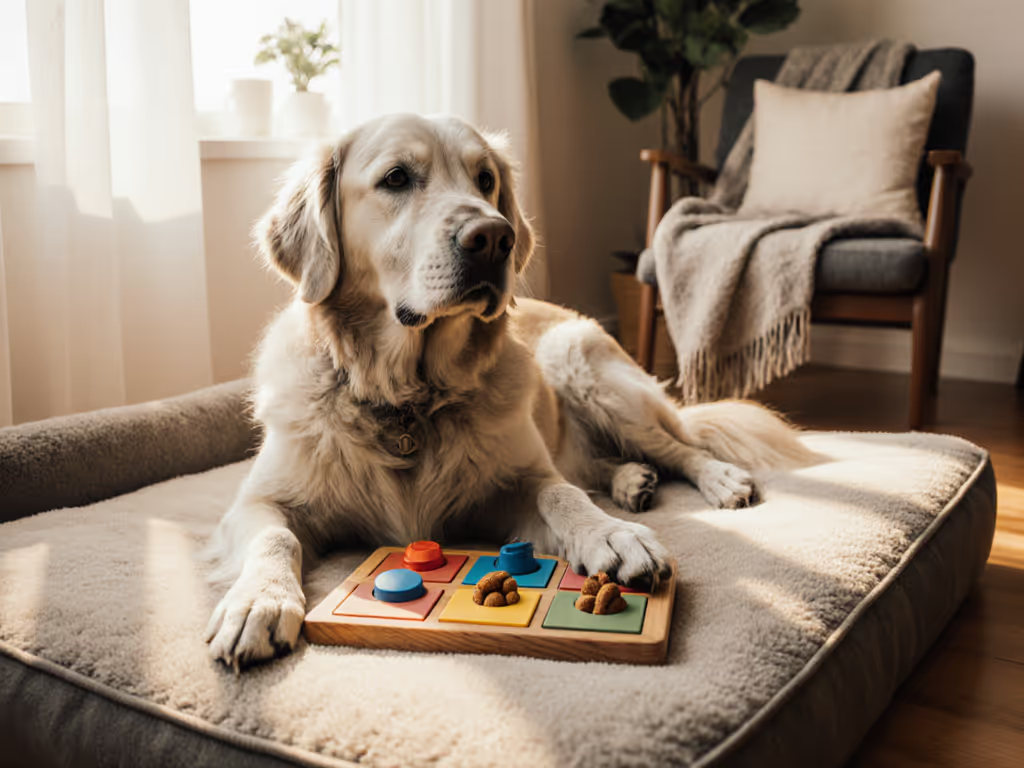
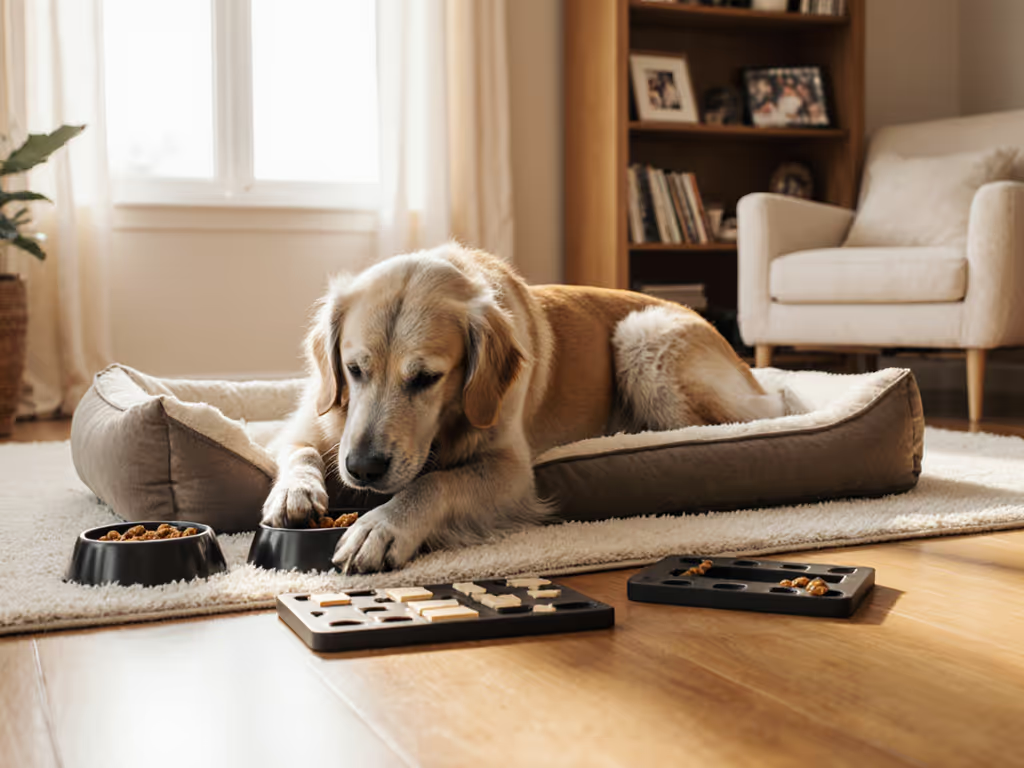
Enriching a dog with mobility-limited dog puzzle toys and arthritis-friendly cognitive enrichment doesn't require high-impact chase or vigorous paw action. When physical movement is constrained, the brain becomes the primary engine for engagement, and the right puzzle toy is the fuel. The challenge isn't finding enrichment; it's finding enrichment that works without aggravating joints, demanding balance, or requiring the sustained standing and reaching that can strain a senior or mobility-limited dog. Scorecard first: let's translate playstyle into risk, enrichment, and expected lifespan for dogs whose physical reach and stamina are finite. If joint pain is your main concern, compare low-impact options in our arthritis dog toys guide.
What Makes a Puzzle "Mobility-Accessible"?
Why standard puzzles fail seniors and limited-mobility dogs
Most puzzle toys on the market assume a dog can stand on hind legs, reach across a board, pivot repeatedly, or exert significant jaw pressure without consequence. For dogs managing arthritis, joint dysplasia, obesity, post-surgical recovery, or age-related frailty, these demands become barriers to engagement rather than gateways. If your dog is recovering from surgery, see our post-op toy picks for safe, low-impact engagement.
Puzzles designed for the general population often exhibit one or more failure modes for mobility-limited dogs: excessive reach height, instability requiring dynamic balance, textures that demand prolonged standing, or difficulty adjustments that offer no low-floor option. The risk profile shifts. A puzzle that's "medium difficulty" for a 40-pound adult may be impossible or pain-inducing for a 45-pound senior with hip dysplasia (not because of intelligence, but because of structural access).
Core metrics for accessible enrichment
When assessing puzzle toys for dogs with limited mobility, focus on four measurable dimensions:
Static engagement height: The toy's topmost reach point relative to the dog's natural nose position (standing, no stretch). Optimal range: 0-6 inches above nose height. Beyond 6 inches triggers postural strain and increased fall risk on transitions.
Stability index: Resistance to tipping, sliding, or rolling during light nose contact. Toys that move unexpectedly during interaction force corrective balance shifts, multiplying joint stress. A weighted base or non-slip underside is essential; lightweight, high-center-of-gravity designs are contraindicated.
Engagement half-life: Time a dog remains actively focused (nose/tongue contact, treat dispensing, or problem-solving behavior) without standing break. Target 8-15 minutes for seniors; anything shorter signals insufficient cognitive load.
Cleanability burden: Whether textures trap food residue requiring disassembly or specialized tools. Dishwasher-safe ratings and smooth internal surfaces reduce post-play cleanup time, critical for guardians managing multiple dogs or time constraints. For detailed methods by material type, use our dog toy cleaning guide.
FAQ: Matching Mobility Profile to Puzzle Type
What's the difference between lick mats, slow feeders, and puzzle toys for mobility-limited dogs?
They occupy different points on the enrichment spectrum, each with distinct accessibility profiles.
Lick mats (textured rubber or silicone surfaces, often with suction-cup bases) require minimal paw or muzzle effort. A dog licks in place, no moving parts, no reaching. Engagement is rhythmic and calming rather than problem-solving focused. Cleanability is straightforward; most are dishwasher safe. Failure modes are rare, primarily surface degradation from prolonged licking or suction-cup loss on certain floor types. For dogs with severely limited mobility or postoperative restrictions, lick mats are the entry point. Engagement half-life typically spans 5-12 minutes; they're suited to settling behavior rather than sustained cognitive challenge. See our best lick mats for low-mess, mobility-safe options.
Puzzle bowls and slow-feeder formats (food-dispensing toys with internal baffles or narrow openings) introduce a mechanical variable without requiring significant manipulation. A dog eats from a traditional position, standing or sitting, but cannot gulp. The pace of enrichment is adjusted by design, not by the dog's problem-solving. Examples like the Outward Hound Fun Feeder combine accessibility (minimal reaching, no balance demand) with mild cognitive load (slower consumption, increased satiation awareness). Failure modes are predictable: surface scratching from canine teeth, occasional blockage if food texture is wrong (very sticky or frozen items).
True puzzle toys (compartments to open, sliding panels, rotating lids, treat-hiding mechanisms) demand active problem-solving, nose/paw sequencing, and usually some degree of reach or directional force. For mobility-limited dogs, the accessibility threshold is higher, but not insurmountable. Low-floor puzzles like the Outward Hound Hide N' Slide (beginner tier) feature treat compartments designed to open with gentle muzzle pressure and minimal reaching, making them viable for many seniors. Engagement half-life extends to 12-20 minutes due to cognitive investment. Failure modes typically involve lost or broken latching mechanisms after 50-100 use cycles, depending on treat hardness and dog persistence.
For a dog managing mobility constraints, the choice depends on the primary goal: calming and settling (lick mat), portion control and pacing (slow feeder), or cognitive stimulation with safe accessibility (beginner-tier puzzle).
Which puzzle toys have the lowest failure mode risk for senior or arthritic dogs?
Toys with the fewest moving parts, weighted bases, and corrosion-resistant materials show the highest predictability. Here's what the testing data suggests:
Bob-A-Lot Food Dispensing Toy: Plastic exterior, sealed internal compartments, adjustable opening. Large size holds up to 3 cups of kibble and remains stable during nose nudging. Failure modes are cosmetic (surface scratches) or catastrophic (cracking if dropped from height), not functional. The adjustable opening allows progression from easy to medium difficulty without replacing the toy. Cleanability is moderate, pieces can be hand-washed but internal ridges trap fine debris. Time-to-failure for mobility-limited dogs: 18-24 months of daily use, depending on treat hardness and treat size choice.
Kong Wobbler: Wobbles erratically during interaction but self-rights due to weighted base. Kibble or soft treats fall out through a relatively large opening with minimal effort; engagement is food-dispensing rather than puzzle-solving. Extremely stable; tipping is rare. Cleanability is excellent; it's sturdy, washable, and straightforward. Time-to-failure: 24+ months for most dogs, making it a high-ROI tool for seniors.
KONG Gyro: Plastic exterior with a central rotating sphere. Treats fall out as the dog touches and spins the blue center. Simple, immediate feedback; no reaching required. Failure modes: cracking under sustained chewing (not recommended for power chewers, but less of a risk for lower-energy seniors) or sphere jamming if packed too tightly. Cleanability is easy. Time-to-failure: 12-18 months for most non-aggressive chewers.
Lick mats (e.g., SodaPup Honeycomb or MoonGem) with suction-cup bases: Zero moving parts; suction cups anchor the mat to tile, linoleum, or plastic surfaces, preventing sliding. Failure modes are confined to suction-cup detachment (environmental, not material-related) or surface degradation after 50+ sessions of vigorous licking. Cleanability: dishwasher safe or hand-wash. Time-to-failure: 12+ months of daily use.
The pattern is clear: toys with fewer moving parts, stable bases, and sealed compartments deliver predictable performance. Toys requiring repeated fine-motor manipulation or force carry higher failure risk for dogs whose cognitive focus may be acute but whose physical capacity is finite.
How do I adjust difficulty for a mobility-limited dog without replacing the toy?
Traditional puzzle progression assumes a dog graduating through difficulty tiers (easy to medium to hard), which often means purchasing three toys across a dog's lifespan. For mobility-limited dogs, especially seniors on fixed budgets, in-toy adjustability is a practical advantage.
Fill-level and treat-size scaling: The Bob-A-Lot and Kong Wobbler both respond to treat-size changes. Use large kibble for fast engagement; switch to small kibble or broken treats for slower dispensing and extended engagement. This internal difficulty adjustment costs nothing and requires no replacement.
Filling strategy: Freeze treats inside a lick mat or stuff a puzzle compartment with wet food rather than kibble. The texture change alters engagement difficulty: frozen requires sustained licking effort; wet food comes free more quickly. This shifts engagement without adding physical demand.
Suction-cup repositioning: Lick mats can be placed on a wall at nose height (reducing bend-down strain) or on the floor (minimal postural demand). The same toy scales to fit environmental and postural tolerance.
Accessory combination: Pairing a simple slow feeder with a snuffle mat or lick mat alongside it creates emergent difficulty; the dog must puzzle out where treats are hidden and manage the textures, without requiring a single replacement purchase.
This modular thinking aligns with the broader principle: when we can measure and adjust a toy's demand, we can keep it relevant across a dog's lifespan without waste.
What's the engagement half-life difference between treat-dispensing toys and static lick mats for low-mobility dogs?
Treat-dispensing toys (puzzles, balls, slow feeders) sustain active interest because they deliver variable rewards. Each interaction produces visible, sometimes audible feedback, a treat falls, a squeaker pops, a compartment opens. The engagement half-life (time until the dog moves away or shows reduced focus) typically spans 12-20 minutes for low-floor puzzle toys like the Hide N' Slide, and 8-15 minutes for food-dispensing balls like the Starmark Treat Dispensing Toy. The variability depends on treat quantity, treat palatability, and puzzle difficulty.
Lick mats and static enrichment deliver predictable rewards (every lick produces more surface contact, consistent food release) rather than variable ones. Engagement half-life is shorter, often 5-12 minutes, because the reward pattern becomes routine quickly. However, calming duration may extend longer; the rhythmic licking and oral contact produce a soothing effect even after active interest wanes, beneficial for anxiety-prone seniors.
For mobility-limited dogs, the choice reflects the enrichment goal:
- Cognitive stimulation + mental fatigue: Choose treat-dispensers (longer engagement half-life).
- Settling and anxiety reduction: Choose lick mats (shorter engagement, calming effect).
- Combination approach: Alternate daily or use both within a rotation to avoid habituation.
Search-result data indicates that dogs with limited mobility benefit most from a mixed rotation, lick mats 3-4 days per week for settling, and treat-dispensing puzzles 2-3 days weekly for cognitive challenge. This pattern maintains enrichment novelty and prevents the "toy extinction" problem (toy present but ignored) that plagues single-tool strategies.
Scorecard: Comparative Accessibility Matrix
Here's a quick reference for mobility-limited dogs across the most tested and accessible toy categories:
| Toy Type | Reach Height Demand | Stability | Engagement Duration | Cleanability | Best For |
|---|---|---|---|---|---|
| Lick mats (suction-cup) | Minimal (wall or floor placement) | Excellent (fixed) | 5-12 min | Excellent (dishwasher safe) | Settling, anxiety reduction |
| Bob-A-Lot | Moderate (nose nudge) | Excellent (weighted) | 10-15 min | Moderate (hand-wash) | Progressive difficulty, treat variety |
| Kong Wobbler | Minimal (base-weighted) | Excellent (self-righting) | 10-15 min | Excellent (washable) | Beginners, soft-treat dogs |
| KONG Gyro | Minimal (light spin) | Good (stable base) | 8-12 min | Excellent (simple design) | Ultra-beginners, small dogs |
| Outward Hound Hide N' Slide | Minimal-Moderate (gentle paw/nose) | Good (flat base) | 12-18 min | Good (removable compartments) | Puzzle-curious seniors, low-impact brains |
Building an Accessible Enrichment Rotation
For dogs with mobility constraints, a weekly rotation prevents habituation while respecting physical limits. A practical framework:
Monday, Wednesday, Friday: Lick mat (5-12 min) paired with supervised free exploration. Builds calming expectation; low physical demand.
Tuesday, Thursday: Treat-dispensing puzzle or slow feeder (10-15 min). Cognitive engagement; static standing posture.
Saturday: Mixed enrichment day: combine lick mat + puzzle toy side-by-side, or introduce a new low-floor option like the KONG Gyro to assess fit.
Sunday: Rest or nostalgic replay (a familiar favorite toy with minimal cognitive demand).
This pattern ensures 3-4 sessions of cognitive engagement per week without overloading joints or creating expectation fatigue. Treats are rationed across sessions, supporting overall caloric and nutritional consistency. For a full system to keep toys fresh without constant buying, follow our toy rotation guide.
Further Exploration
The foundation for accessible enrichment is measurement. Before choosing a puzzle for a mobility-limited dog, document three baseline metrics: current standing duration without postural correction, favorite treat type and size, and typical engagement tolerance on existing toys. Then cross-reference your dog's profile against the accessibility matrix above.
If your dog gravitates toward licking or gentle nose work, lick mats and slow feeders are your entry tier. If problem-solving captures interest, graduated puzzle toys (Hide N' Slide to Challenge Slider progression) offer scaling without replacement waste. Most importantly, rotate toys intentionally and retire any that create postural strain, instability, or repeated failure. Risk matters more than novelty when mobility is already compromised.
Your role is to measure, adjust, and iterate. When enrichment is tied to accessible, testable criteria, every puzzle becomes a tool for confidence, not guesswork.
Related Articles