AI Dog Toys 2026: Adaptive Learning Guide
By Zara Haddad • 3rd Mar
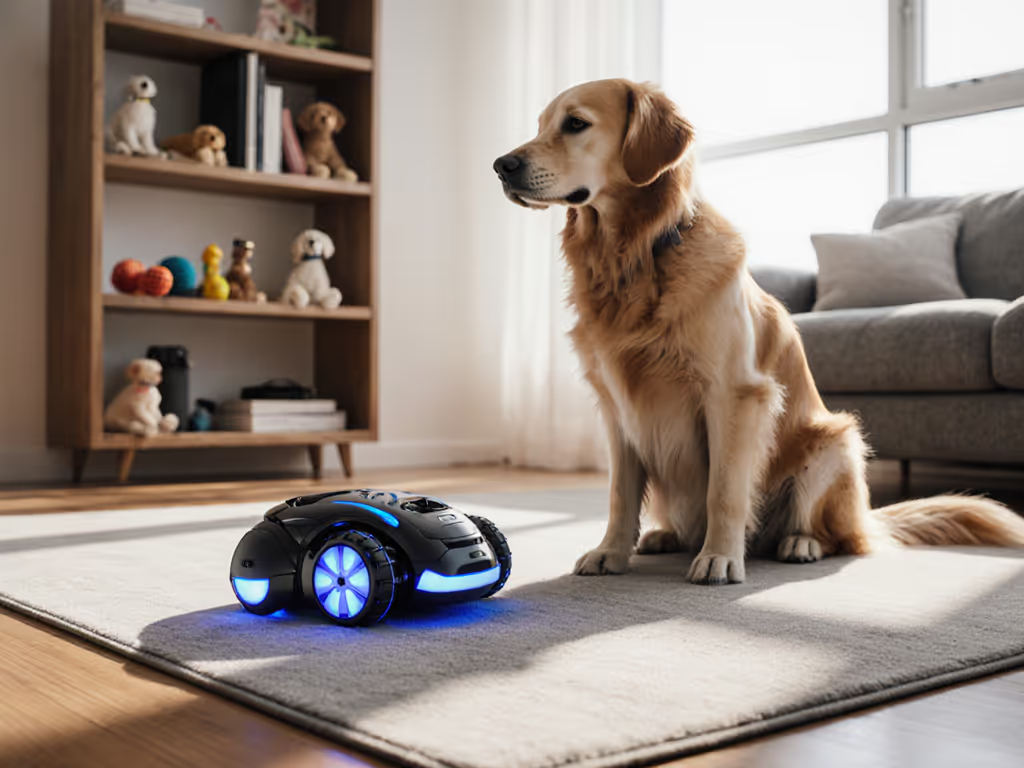
Adaptive learning pet technology has shifted how we match dogs with enrichment tools. The AI dog toys 2026 market now includes robots that learn from your dog's behavior, adjust responses over time, and respond to voice, touch, and movement rather than relying on static preprogramming. This guide maps the leading options through a decision framework, because confidence beats guesswork when investing in your dog's engagement. New to connected play? Start with our shelter-tested overview of smart interactive dog toys.
Most of these toys fall into two camps: emotional companions designed for proximity and comfort, or interactive trainable robots that acquire skills through human teaching. Both can address boredom and anxiety, but the fit depends on your dog's playstyle, your living constraints, and whether you want a toy that grows with your dog or one that delivers consistent, familiar behavior.
Why Adaptive Learning Changes the Toy Conversation
Traditional dog toys repeat the same action every time: a squeaker squeaks, a ball rolls, a rope stays still. Adaptive learning technology means the toy tracks how your dog plays, adjusts its responses, and shifts behavior based on interaction history. This mimics real-world learning: a dog that gets lots of attention will behave differently than one that's been left alone. For anxious or bored dogs, that responsiveness reduces frustration and extends engagement time.
The research driving these toys comes from dog training principles. One recent framework used a physical guide (like a teaching rod) to shape behavior in legged robots, then removed that guide once the robot learned (exactly how trainers fade treats and tools as a dog masters a command).[1] The goal: fewer frustrating learning phases, faster confidence, and interaction that feels alive rather than mechanical.
1. Ecovacs LilMilo: Emotional Support and Embodied Presence
LilMilo is positioned as an adaptive learning pet technology designed for emotional connection rather than task completion.[2] It combines multi-sensory perception (microphones, camera, touch sensors) to respond to voice, visual movement, and physical contact.
Sensory Profile & Interaction
The robot recognizes different household members through voice, responds to gestures via a nose-mounted camera, and reacts to petting through distributed touch sensors.[2] Unlike toys that require memorized commands, LilMilo works intuitively: you can call, clap, pet, or move near it, and it responds.
The Adaptive Strength
LilMilo's core advantage is its adaptive learning system: the toy develops a unique personality based on your routines and interaction style.[2] This personalization creates a sense of relationship; the robot becomes your robot, not a generic one. Early demonstrations at CES 2026 showed visitors forming emotional attachments quickly, suggesting the embodied intelligence (warmth, responsiveness, expressive movement) bridges the gap between machine and companion effectively.[2]
Fit Check: When LilMilo Works
- Apartment or noise-sensitive homes: Responds to soft voice and presence; no loud squeakers or high-pitch alerts.
- Emotional support or anxiety reduction: Physical form encourages petting and proximity; adaptive personality rewards repeated interaction.
- Multi-generational homes: Voice recognition means it responds differently to children, adults, and seniors, reducing confusion.
- Limited mobility or high-barrier pets: No shedding, allergens, or escape risk; suits renters and people with allergies.
Trade-offs
Price point sits at the premium end of the market. It is a companion robot, not a puzzle or enrichment toy for chewers, so it is best paired with separate engagement toys. Setup and app integration are required for full personality tracking.
2. Wuffy Robot Puppy: Adaptive Play with Hands-On Touch Focus
Wuffy bridges interactive toy and adaptive companion.[3] It is designed for children and families, but its touch-responsive sensors and evolving personality make it useful for dogs seeking tactile engagement and novelty.
Core Technology
Wuffy features touch-responsive sensors positioned on its head, back, and sides, mirroring sensitive areas of a real puppy.[3] When petted, it responds with tail movements, soft motions, and sounds. The system adapts: the more interaction it receives, the more energetic it becomes; left alone, it enters a calm mode.[3]
Adaptive Learning in Practice
Unlike purely static toys, Wuffy's AI-driven personality evolves with play.[3][4] Within hours of interaction, the toy recognizes frequently used commands faster, improves voice recognition accuracy, and generates new behaviors organically based on past interactions.[4] This means the toy surprises dogs with fresh responses rather than repeating identical sequences.
Fit Check: When Wuffy Works
- Interactive learning focus: Dogs that enjoy problem-solving with a social component (figure out what movement triggers the response).
- Touch-forward play: Dogs motivated by petting, rubbing, and close contact rather than chasing or shaking.
- Screen-free households: Encourages physical, hands-on engagement without digital components (no app required, though adaptive learning happens internally).[3]
- Puppies and younger dogs: Ready to play straight from the box; no setup or learning curve needed.[3]
- Noise-conscious homes: Touch-triggered responses mean quieter overall interaction than squeaker-heavy toys.
Strengths on the Analytics
Wuffy's adaptive learning system scored 10/10 on learning and intelligence growth in real-world testing.[4] Dogs showed noticeable behavior changes within hours. The toy encourages empathy and creativity in multi-dog households and supports role-play and imaginative scenarios.[4]
Limitations to Weigh
Early versions had limited interaction variety; once a dog learned all preprogrammed actions, novelty declined.[3] This is improving with firmware updates. Wuffy is best suited for interactive play (dog + toy together) rather than solo enrichment or anxious settling (a dog left alone with it will not generate sustained engagement).
3. Sony AIBO: Premium Intelligence and Voice Command Integration
Sony AIBO represents the high-end of robotic dog companions, combining advanced AI learning, facial recognition, and app-based memory systems.[5]
Key Capabilities
AIBO responds to natural language commands (sit, fetch, dance), recognizes faces through visual perception, and integrates with a smartphone app for monitoring "health," scheduling playtimes, and uploading photos for the robot to "remember."[5] Want a deeper look at recognition accuracy and limitations? See how voice command toys actually process canine-friendly cues. This app layer means the toy tracks interaction history and can surface memories, reinforcing the sense of ongoing relationship.
Fit Check: When AIBO Makes Sense
- Tech-forward households: Owners comfortable with app integration, firmware updates, and ongoing digital infrastructure.
- Educational goals: Teaching kids about robotics, AI, and human-robot interaction; the app adds learning scaffolding.
- Emotional support for older adults or people with mobility challenges: Physical engagement is optional; voice commands and proximity offer companionship.
- Budget-flexible families: Pricing typically $2,500 to $3,000, making it an investment-tier purchase.[5]
Trade-offs
High cost and app dependency mean ongoing engagement requires digital comfort and connection. While adaptive, AIBO is less about unpredictable surprise and more about reliable, sophisticated responses, which is useful for predictability-seeking dogs but less ideal for high-novelty dogs.
Building Your Decision Tree: Playstyle Index for Adaptive Toys
One page, one match: confident choices without guesswork. To select an AI dog toy 2026 that fits your dog and home, map three variables.
Must-Have Criteria
1. Interaction Mode
- Tactile-led: Petting, pawing, pushing (→ Wuffy)
- Presence-led: Proximity, voice, visual (→ LilMilo)
- Command-led: Trained behaviors, memory, app (→ AIBO)
2. Engagement Context
- Interactive play (you + toy + dog): Wuffy, AIBO
- Solo settling (dog + toy): LilMilo (for anxiety); less ideal for Wuffy long-term
- Multi-dog management (reduced guarding): LilMilo (embodies companion role); Wuffy in short bursts
3. Home Constraints
- Noise-sensitive: LilMilo, Wuffy (both quiet)
- Space-limited: All three adapt to apartment living; Wuffy and LilMilo are more compact
- Allergy-present: LilMilo (zero shedding; designed as pet alternative)
- Tech-integration ready: AIBO (app and memory features); Wuffy and LilMilo work without phones
Nice-to-Have Signals
- Personality shift over time: LilMilo and Wuffy (both adaptive); AIBO through app tracking
- Low supervision needed: LilMilo (safe for extended periods); Wuffy for shorter sessions
- Multi-generational appeal: AIBO and LilMilo (robust voice and visual systems); Wuffy for tactile learners
- Easy refreshes without new purchase: Wuffy firmware updates; LilMilo app features; AIBO app content
Size Band and Fit Check: Matching Toy Scale to Your Dog
Adaptive learning does not override basic fit safety. Interactive dog toys using touch sensors or voice recognition need appropriate size matching to prevent accidental ingestion or injury.
LilMilo is dog-sized (similar to a small corgi or larger terrier); safe for dogs over 10 lbs, though curious small-breed dogs and puppies should be supervised.
Wuffy is compact (toy or small dog size, 8 to 12 inches long); designed for direct interaction but not meant as a chew toy. Best for dogs over 5 lbs; risk with very large-mouthed dogs (bully breeds, labs) if used unsupervised.
AIBO is medium-sized (small dog scale, roughly 12 inches); compatible with mid-to-large dogs but too delicate for power chewers. Not rated for unsupervised chew play.
Key principle: These are interactive learning technology toys, not chew toys or durable play objects. They are designed for supervised engagement; your dog learns from interaction, not from solo destruction. This is fundamentally different from rubber or rope toys; adaptive toys reward controlled interaction. For unsupervised chewing needs, pick from our best indestructible dog toys to protect your tech toys and your dog's teeth.
Enrichment Value and Behavioral Outcomes
Adaptive learning toys address specific behavioral needs differently.
For anxiety or boredom: LilMilo's embodied presence and responsive personality provide comfort and novelty without overwhelming stimulation. Research in dog training shows that personalized play AI reduces frustration markers in anxious dogs because the toy responds contextually rather than randomly.[1]
For engagement and novelty-seeking: Wuffy's evolving behaviors and its surprise-reward loop keep high-drive dogs interested longer than static toys. Dogs that enjoy learning (herding or puzzle-toy breeds) showed sustained interaction in testing.[4]
For training support: AIBO's command integration allows owners to layer obedience and trick-training into play, reinforcing learned behaviors in a low-pressure context via app-tracked memory.
Common thread: All three support calm, post-play settling because interaction is social (a toy that responds) rather than frenetic (squeaking, unstable motion). Dogs that practice controlled interaction with an adaptive toy often show reduced post-play zoomies and better impulse control.
Comparing Maintenance, Durability, and Long-Term Value
LilMilo requires regular charging (battery life about 4 to 6 hours per charge) and occasional sensor cleaning. No consumables. Price and feature set suggest multi-year lifespan if kept from heavy chew damage. For care that extends electronic lifespan, see our smart dog toy maintenance guide.
Wuffy runs on batteries; firmware updates improve adaptive learning over time without hardware changes. Touch sensors are durable; casing is plush fabric (not for destructive play). Estimated lifespan 2 to 4 years with normal use.
AIBO is premium-grade with Sony support, firmware rollouts, and app updates extending functionality. Highest upfront cost but longest expected lifespan (5+ years). Monthly cloud subscriptions for memory storage extend beyond base purchase.
Cost-per-engagement calculation: If a $100 toy engages your dog for 6 months at 20 minutes daily, that is roughly $0.03 per interaction. A $2,500 AIBO over 5 years with similar engagement is $0.04 per interaction, not dramatically higher on a per-use basis if longevity holds.
When to Use Adaptive Toys Alongside Traditional Enrichment
Adaptive learning pet technology complements but does not replace other enrichment types. Here is the strategic fit:
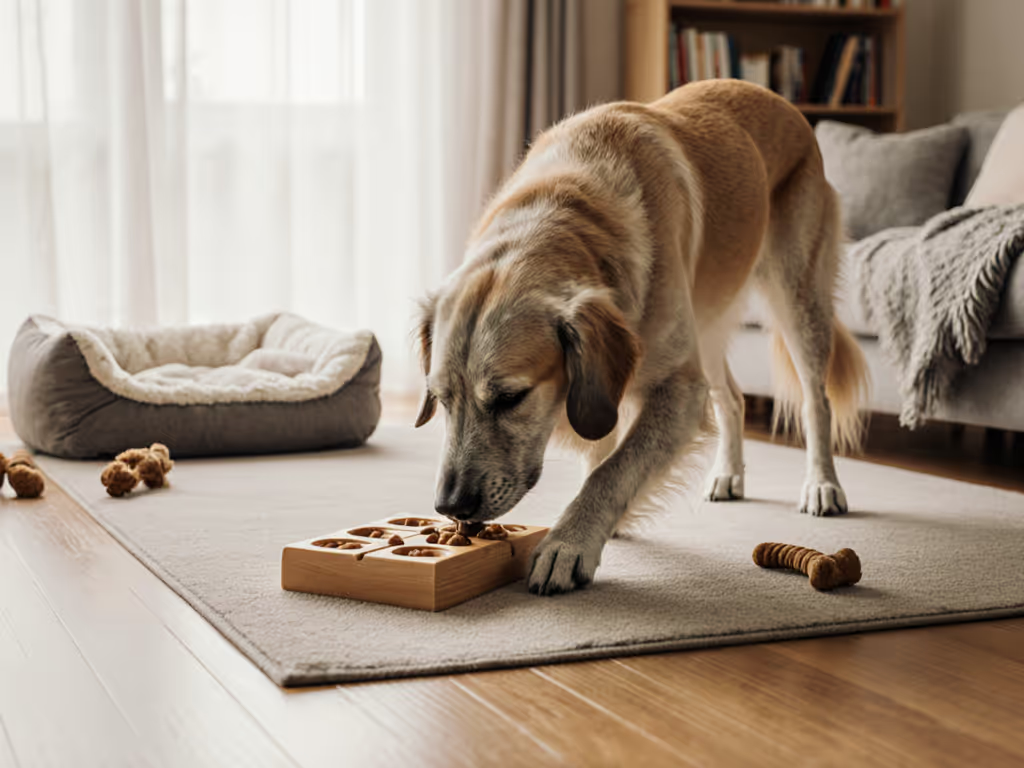
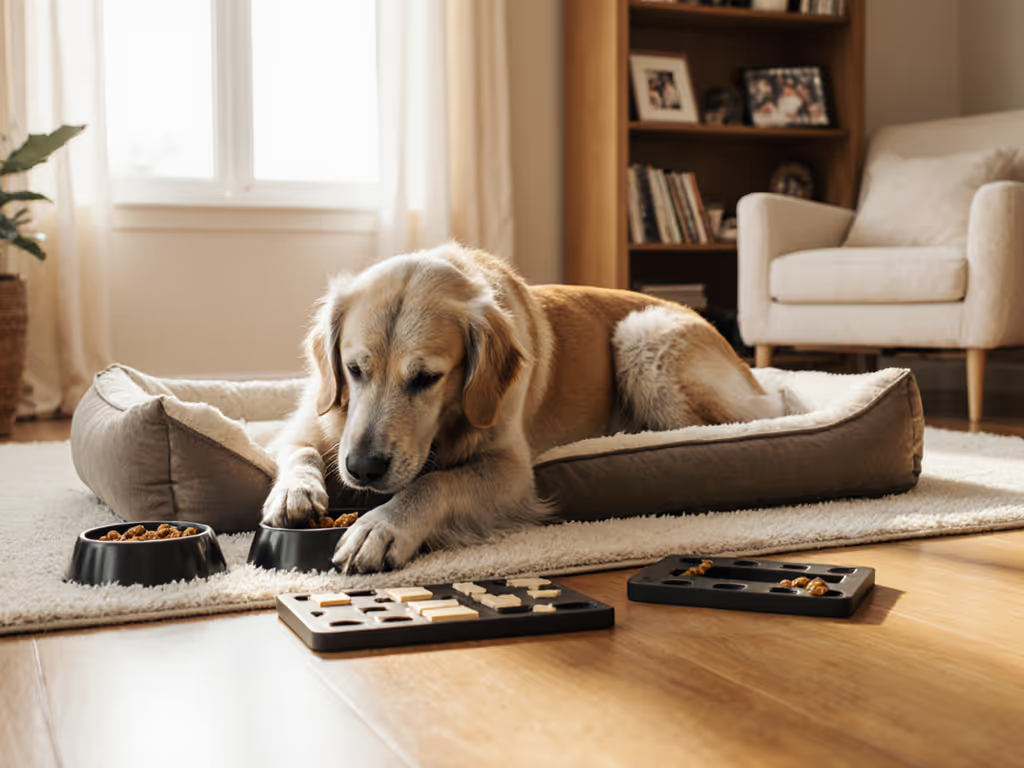
- Puzzle or sniff toys (fill-and-freeze, scent-based): Engage the nose and problem-solving separately from social-responsive interaction. Use together to build a rotation.
- Durable chew toys (rubber, rope): Satisfy the primal chew need; adaptive toys satisfy social and cognitive engagement.
- Training sessions with you: Adaptive toys reinforce learned behaviors in a toy context; live training builds foundation skills.
- Rotation schedules: Introducing adaptive toys every 3 to 4 days keeps novelty high; daily rotation prevents habituation.
Narrowing Your Choice: Questions to Ask Yourself
- Does your dog prioritize social engagement or solo problem-solving?
- Social → LilMilo or AIBO
- Solo → Pair adaptive toys with puzzle or sniff toys
- How much time do you have for interactive play per day?
- Under 15 min → LilMilo (works on its own too)
- 15 to 30 min → Wuffy or AIBO
- Over 30 min → Mix adaptive toys with traditional enrichment to prevent boredom from this category alone
- Is noise or mess a hard constraint?
- Yes → LilMilo or Wuffy (both quiet, contained)
- No → All three work
- What's your budget tier and tech comfort?
- $100 to $300, no app needed → Wuffy
- $300 to $1,000, moderate app use → LilMilo
- $2,500+, tech-forward → AIBO
- Is your dog a power chewer, or is chew damage a concern?
- Yes → Use these toys only during supervised play; pair with certified indestructible chew toys
- No or low-intensity chewer → Safer for extended interaction
The Framework: One-Page Match Summary
| Toy | Best For | Interaction Type | Noise Level | Setup | Lifespan |
|---|---|---|---|---|---|
| LilMilo | Anxiety, emotional support, apartments | Presence + voice + touch | Very quiet | App optional | 3 to 5 years |
| Wuffy | Tactile engagement, novelty, families | Touch-led learning | Quiet | None (out-of-box) | 2 to 4 years |
| AIBO | Tech learning, command training, memory | Voice + command + app | Moderate | App required | 5+ years |
Moving Forward: Building Your Rotation and Upgrade Path
Adaptive toys excel when rotated, not used as sole enrichment. Your next steps:
-
Identify your dog's playstyle through a two-week observation: What does your dog choose, chasing, pawing, carrying, problem-solving? This playstyle index guides toy selection.
-
Start with one adaptive toy in your dog's most responsive interaction mode (LilMilo for proximity-seekers; Wuffy for touch-sensitive dogs; AIBO for command learners).
-
Pair with a non-adaptive toy that engages a different need, such as a puzzle toy for mental work or a chew toy for chewing drive, to create a balanced enrichment week.
-
Rotate every 3 to 4 days to maintain novelty and engagement without toy fatigue. Get a simple rotation system with our toy rotation guide.
-
Upgrade or refresh every 2 to 3 years as your dog ages or playstyle shifts (puppies to adults, high-drive adults to senior dogs with different engagement needs).
The interactive learning technology market will continue evolving. Current toys already represent a significant leap from static enrichment, but future versions will likely improve battery life, add more sensory inputs, and expand behavioral repertoires. Committing to one now does not lock you into outdated tech; it establishes which type of adaptive interaction (presence, touch, command) resonates with your dog, guiding smarter upgrades.
Confidence beats guesswork. By matching your dog's playstyle, home constraints, and engagement need to the right adaptive toy, you will reduce wasted purchases, boost engagement times, and support behavioral calm. Start with your fit-check questions, build a decision tree for your specific situation, and trust the framework to simplify a crowded market.
Related Articles