
Breed-Specific Toy Subscriptions That Actually Engage
By Alma Rivera • 15th Feb
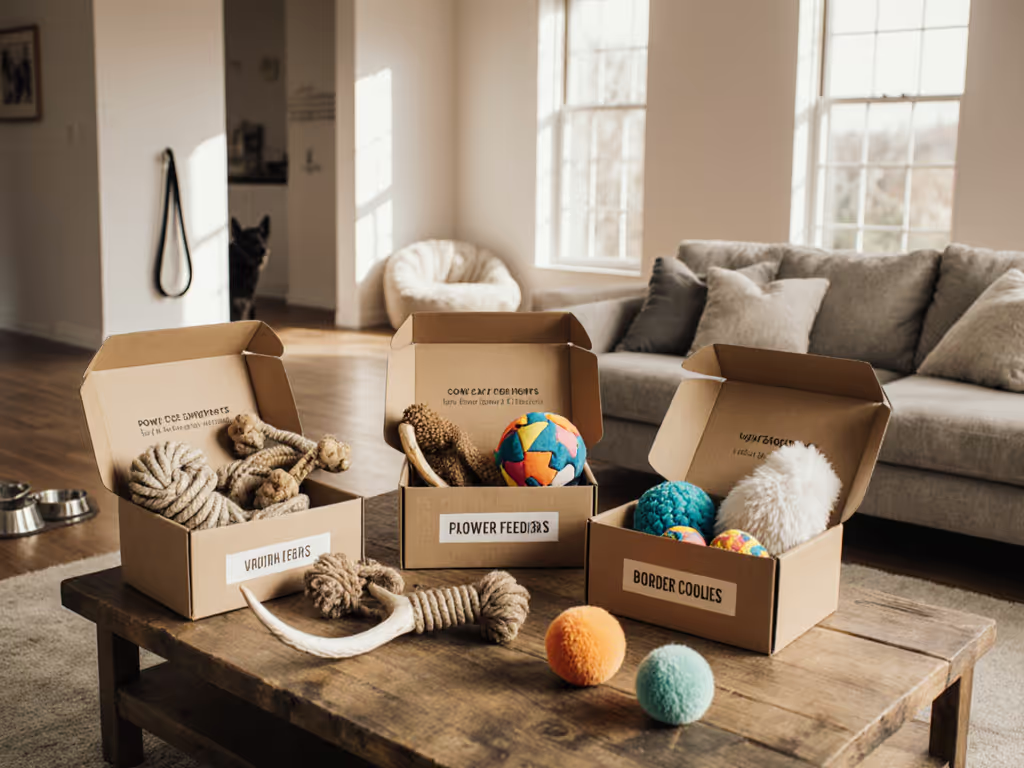
Choosing the right breed-specific toy subscription doesn't require guesswork, it requires matching a dog's instincts, jaw strength, and energy profile to a box designed to engage those needs long-term. Most subscriptions treat dogs as one category, but instinct-based toy boxes recognize that a herding border collie's mental enrichment needs differ fundamentally from a powerful mastiff's chew resistance requirements, and both differ from a retriever's natural drive to carry and puzzle-solve.
This guide walks you through assessing your dog's enrichment profile, evaluating subscription options against home-friendly criteria, and selecting a service that delivers engagement without adding noise, mess, or supervision demands to your household.
Step 1: Profile Your Dog's Playstyle and Jaw Strength
Before reviewing any subscription, establish your dog's enrichment baseline. This step saves money and prevents cycling through boxes that disappoint. If you're new to profiling, see our dog toy selection framework for matching breed, age, and playstyle.
Identify the primary playstyle:
- Destructive chewers: Dogs who shred plush toys into confetti within minutes; typically medium-to-large power breeds, terriers, or adolescent herding dogs
- Moderate chewers: Dogs who engage with toys for 15-45 minutes before losing interest; typical of adult working dogs and most retriever mixes
- Puzzle-solvers: Dogs driven by problem-solving and scent work; hounds, herding dogs, and highly food-motivated breeds
- Carry-and-manipulate: Dogs who prefer to hold, toss, and reposition toys; retrievers, spaniels, and soft-mouthed breeds
- Settles and comfort-seekers: Dogs who use enrichment to self-soothe; anxious dogs, seniors, and breeds prone to separation stress
Most dogs have a primary and secondary playstyle. For example, a foster herding dog I worked with (bouncy, relentless, thin-walled apartment nightmare at 2 a.m.) had a primary playstyle of puzzle-solver with destructive secondary chew. That profile became my north star. Every toy selection had to answer two questions: Does it challenge the brain first? Does it withstand 15 minutes of frustrated destruction if the puzzle element doesn't hold her attention?
Assess jaw strength independently of size:
Small dogs can have enormous bite force (many terriers); large dogs may have gentle mouths (some sighthounds). Test jaw strength by offering a knotted rope toy and observing whether the dog unravels the knots or simply shakes the toy. Knot-unravelers typically have high jaw strength and higher shred potential.
Record this data: Dog name, weight, breed/mix, primary playstyle, secondary playstyle, jaw strength (gentle / moderate / strong), and any sensitivities (noise aversion, mess sensitivity, anxiety triggers).
Step 2: Define Your Home's Enrichment Constraints
Great enrichment fits the household's rhythm, not fights it. Before selecting a subscription, map your non-negotiables.
Noise profile: Measure in decibels if possible, or use simple tiers:
- Quiet-priority homes (apartments, shared walls, night-shift neighbors, napping babies, concentration-dependent work-from-home): Squeaker-free or low-decibel squeakers only
- Moderate-tolerance homes (detached houses, flexible schedules): Standard squeakers acceptable
- Noise-flexible homes (rural properties, daytime engagement only): High-decibel toys permitted
I learned this the hard way. At 2 a.m., testing a rubber weight toy versus a squeaky plush toy during a foster's 15-minute enrichment window, the rubber weight won despite less obvious engagement. Quiet brains beat loud rooms: design enrichment around life. For small-space setups, our apartment toy noise comparison ranks picks by measured decibels.
Mess index: Categorize toys by cleanup demand:
- Low-mess: Solid rubber, nylon, or rope toys; minimal crumbs or debris
- Medium-mess: Kibble-dispensing toys, snuffle mats, or puzzle inserts that require floor scanning post-play
- High-mess: Stuffed toys that leak filling, wet enrichment (frozen kongs), or hide-and-seek toys involving scattered treats
Supervision load: Rate your capacity:
- Low/medium/high: can you monitor continuously, periodically check in, or require unattended safe engagement?
Wash cycles: Document your tolerance for cleaning: Are toys dishwasher-safe? Can they handle machine wash? Do crevices trap debris?
Setup time: Estimate minutes available for toy prep before play, including freezing kongs, loading puzzle inserts, or untangling ropes.

Step 3: Compare Breed-Specific and Instinct-Based Subscription Models
Subscription services fall into three models. Understanding the differences helps you match the right one to your dog's profile.
Model 1: Size-Tiered (Breed-Agnostic)
BarkBox is the most recognizable size-tiered service, offering boxes designed for small, medium, or large dogs. Each box contains two toys, two bags of all-natural treats, and one chew, all centered around a rotating monthly theme (pop culture, seasonal, holiday-themed). The service is wheat, corn, and soy-free, and owners can switch box sizes anytime as dogs grow.
Engagement fit for breed-specific needs:
BarkBox's strength is variety and creativity; its limitation is lack of instinct-matching. A small-breed toy selected for a dachshund may not challenge a Russell Terrier's puzzle drive in the same way. Testing data shows BarkBox toys often serve dual purposes (tug-and-puzzle design), which extends durability for moderate chewers but may disappoint destructive chewers who want singular, dedicated engagement.
Noise profile: Standard squeakers included; not ideal for quiet-priority homes. Mess index: Moderate (treat crumbs, occasional toy debris). Supervision load: Low to medium; most toys are safe for unsupervised brief play. Wash cycles: Plushies typically hand-wash or delicate cycle; not all items dishwasher-safe. Setup time: Minimal (toys arrive ready to use).
Model 2: Customizable Boxes with Safety Filters
PupJoy combines pre-built and customizable boxes with high-quality toy options suitable for both light and heavy chewers. It allows guardians to select durable or plush toy preferences, and the service offers free shipping.
Engagement fit for breed-specific needs:
PupJoy's customization bridges the gap between one-size-fits-all and true breed-specificity. Owners can filter for toy durability preference and include their dog's size, creating a more targeted match. Real-world testing shows PupJoy toys are durable across chew intensities, making it accessible to power-chewer households.
Noise profile: Customizable; request quiet toys if needed. Mess index: Low to medium (depends on toy selections). Supervision load: Low to medium. Wash cycles: Varies; high durability often means machine-washable options. Setup time: Minimal.
Model 3: Intensity-Focused Subscription
Bark Super Chewer, created by BarkBox's team, targets dogs with extreme chew drive. It includes a toy replacement guarantee (if your dog destroys a toy, the company replaces it). The box is wheat, corn, and soy-free.
Direct comparison data shows Bark Super Chewer wins reliability for heavy chewers; independent testing ranked it above standard BarkBox and Bullymake for aggressive chewers. However, one reviewer noted that "Super Chewer is advertised as the aggressive chewer box, but it's suitable for just about any dog with a well-developed chew toy habit."
Engagement fit for breed-specific needs:
This subscription directly addresses destructive-chewer playstyle. It's ideal for power-chewer households where standard toys fail within days. Ideal for bully breeds, adult shepherds, and high-drive adolescents.
Noise profile: Standard squeakers; check customization options. Mess index: Low (durable toys shed less debris). Supervision load: Low to medium. Wash cycles: Highly durable toys often support machine wash. Setup time: Minimal.
Step 4: Evaluate Against Home-Friendly Criteria
Now apply your home's constraints (noise profile, mess index, supervision load, wash cycles, setup time) to each subscription option.
Noise-Priority Homes (Apartments, Shared Walls, Concentration Work)
Recommended approach: Customize away from squeakers; prioritize rubber, nylon, or rope toys.
- BarkBox: Request theme preference and note "squeaker sensitivity" if the service allows custom notes. Standard boxes include squeakers, so verify flexibility.
- Bark Super Chewer: Similarly squeaker-inclusive; check for customization options before subscribing.
- PupJoy: Explicitly allows selection of toy types; select "durable" toys and note quiet preference. Best fit for this constraint.
Unilateral win: PupJoy, for explicit noise-level customization.
Low-Mess Homes (Frequent Floor Cleaning Restrictions, OCD Tendencies, Babies)
Recommended approach: Avoid stuffed toys with filling; prioritize solid rubber, nylon, and rope. Minimize powder-coated toys that shed dust.
- BarkBox: Includes plush toys standard, which shed filling; not ideal.
- Bark Super Chewer: Designed for durability, typically solid construction with minimal debris.
- PupJoy: Fully customizable; select durable toy preference to exclude plush toys.
Unilateral win: Bark Super Chewer or PupJoy with durability filter; avoid standard BarkBox if low-mess is non-negotiable.
High-Supervision-Load Reduction (Working Parents, Multi-Dog Homes, Busy Schedules)
Recommended approach: Prioritize toys safe for extended unsupervised play; avoid small parts, choking hazards, or toys requiring active management.
Pooch Perks stands apart here. It offers customization for food sensitivities and allergies, and includes size-specific boxes. Each Pooch Perks box is customizable depending on your dog's needs, including allergy considerations and choice of plush or durable toys, and even frequency of box.
Engagement fit for breed-specific needs: Pooch Perks is ideal for multi-dog households, dogs with food sensitivities, and guardians seeking reduced supervision load. Its customization breadth (size, allergies, toy durability, enrichment frequency) allows near-exact matching to household constraints.
Noise profile: Customizable. Mess index: Fully customizable; select durable toys and low-mess treats. Supervision load: Low to medium; highly configurable. Wash cycles: Depends on selections. Setup time: Minimal.
Unilateral win: Pooch Perks for multi-constraint households; excellent for foster homes requiring maximum flexibility.
Durability-Proven Heavy Chewers
Comparative testing ranked Bullymake and Bark Super Chewer as top performers for destructive chewers. Bullymake won a direct three-way comparison scoring 13 points versus BarkBox's 12 points, with both significantly outperforming standard Kong Box (10 points). Reviewer notes: "My dog is a pit mix with a strong jaw and a stronger determination to destroy all her toys, but she couldn't break any of the Bullymake toys."
For power-chewer households, Bullymake and Bark Super Chewer are evidence-backed choices. Standard BarkBox is adequate for moderate chewers but loses ground against intensity-focused subscriptions for true power breeds. For non-subscription solutions, see the best chew toys for hard chewers we stress-tested.
Age-Tailored and Accessory-Rich Boxes
PupBox stands out for age-specific toy selection, bundling toys with training guides and accessories (bandanas, leashes). Boxes are tailored to a dog's age, so puppies receive teething toys while adult dogs get larger tug toys. Each box includes 5-7 items: toys, treats, and an accessory plus a training guide. Testing notes the value for 12-month subscriptions despite toys being "a few dollars more than BarkBox's."
Engagement fit for breed-specific needs: PupBox bridges enrichment and training, making it ideal for first-time puppy parents or adopters building confidence. Age-specific selections reduce waste on mismatched toys.
Supervision load: Medium (training guides require reading and implementation, but toys are designed for safety). Wash cycles: Accessories like bandanas are typically machine-washable.
Step 5: Apply Breed-Specific Enrichment Logic
Once you've narrowed subscriptions by home constraints, overlay breed-specific enrichment needs. For deeper instinct matching by breed group, explore our breed-specific toy guide.
Working and Herding Breeds (Border Collies, German Shepherds, Australian Cattle Dogs)
Primary need: Mental challenge + sustained engagement.
These breeds require puzzle and problem-solving enrichment, not just chew toys. Bark Super Chewer, PupJoy (with durable selection), and Pooch Perks (customizable for food-driven puzzles) offer multi-modal toys (chew + puzzle combinations). Avoid service limits if they offer only plush toys without cognitive demand.
Recommended path: Customize toward durable, multi-modal toys. Request puzzle-centric themes if services allow notes.
Bully and Power-Chewer Breeds (Pit Bulls, Bullmastiffs, Bull Terriers)
Primary need: Extreme chew resistance + extended engagement under high jaw pressure.
Bark Super Chewer is purpose-built for this profile with toy replacement guarantee and durability testing. Direct evidence shows it outperforms generic sizes in power-chewer testing.
Recommended path: Bark Super Chewer as primary choice; Bullymake as secondary if you want to trial multiple services.
Hunting and Retriever Breeds (Labrador Retrievers, Pointers, Spaniels)
Primary need: Carry-and-retrieve engagement + food-driven enrichment + moderate durability for multi-modal play.
BarkBox and PupJoy both offer carry-friendly toy designs and food enrichment options. Hunting breeds often enjoy softer carry toys paired with puzzle toys, which these services accommodate.
Recommended path: BarkBox for creative variety and entertainment; PupJoy if customization for quiet environments or specific toy textures is needed.
Small Breeds and Senior Dogs (Dachshunds, Chihuahuas, Senior Dogs)
Primary need: Age-appropriate sizing, safety (no choking hazards), and lower-intensity enrichment.
PupBox is explicitly age-tailored, including puppy teething toys and adult-size progressions. Pooch Perks offers small-dog sizing with customization for accessibility. Standard BarkBox includes a small-dog tier but lacks age-specificity; PupBox is superior here.
Recommended path: PupBox for first-time or rescue small-dog parents; Pooch Perks if multi-dog household or allergies are factors.
Step 6: Build Your Subscription Rotation Plan
Now that you've identified candidate subscriptions, design a rotation plan that prevents boredom and adapts to life changes. Use our toy rotation system to sustain engagement without buying extra boxes.
Month 1-3: Trial single subscription
Choose one service based on your dog's primary profile (destructive chewer, working breed, small dog, etc.). Document engagement: How many minutes does each toy hold attention? What breaks first? Is noise acceptable? Is cleanup manageable?
Month 4-6: Secondary trial or scale
Either continue the first subscription or trial a second service for 3 months to compare. Real-world testing beats theoretical preference.
Month 7+: Stabilize or rotate
Select a primary subscription that meets 80% of your needs. If boredom sets in (dog loses interest), switch frequency or customize selections rather than abandon the service. Many subscriptions allow pausing, resuming, or adjusting themes.
Multi-dog households:
Consider one service with multi-dog customization (like Pooch Perks with mixed-household tier) rather than multiple individual subscriptions. This reduces cost and simplifies management.
Step 7: Measure Success and ROI
Define success metrics before month 1 ends.
- Engagement time per toy: Average minutes before the dog abandons play
- Toy lifespan: Days until first damage or complete failure
- Mess score: Subjective 1-5 scale; 1 = zero debris, 5 = extensive cleanup
- Noise incidents: Count of neighbor complaints or disruptions per box
- Behavioral change: Note reduction in destructive behavior, anxiety levels, or boredom signs
Example ROI formula:
If a subscription costs $35/month and delivers 5 toys with average lifespan of 20 days each (100 dog-days of engagement) versus your current $50/month in random toy purchases with 5-day lifespan (25 dog-days), the subscription delivers 4x more engagement per dollar.
Track this for 2-3 months before deciding to continue.
Actionable Next Steps
-
This week: Complete your dog's profile (playstyle, jaw strength, home constraints). Write it down.
-
Next week: Choose one subscription based on your primary constraint (noise, durability, mess, or age). Commit to a 3-month trial.
-
Week 2-4 of trial: Document engagement, lifespan, mess, and noise for each toy. Adjust customization if needed.
-
Month 3 review: Compare ROI and behavioral outcomes. Decide: continue, trial a second service, or adjust selections within the same service.
-
Ongoing: Rotate themes or frequency every 4-6 months to prevent novelty fade; adapt subscription selections as your dog ages or your home constraints shift.
Breed-specific enrichment isn't about flashy toys, it's about matching your dog's instincts and your household's rhythm to a service that delivers both engagement and peace. Start small, measure carefully, and build a system that works for your life, not against it.
Related Articles